Bacteriostatic Water Explained for Research Labs
What Is Bacteriostatic Water?
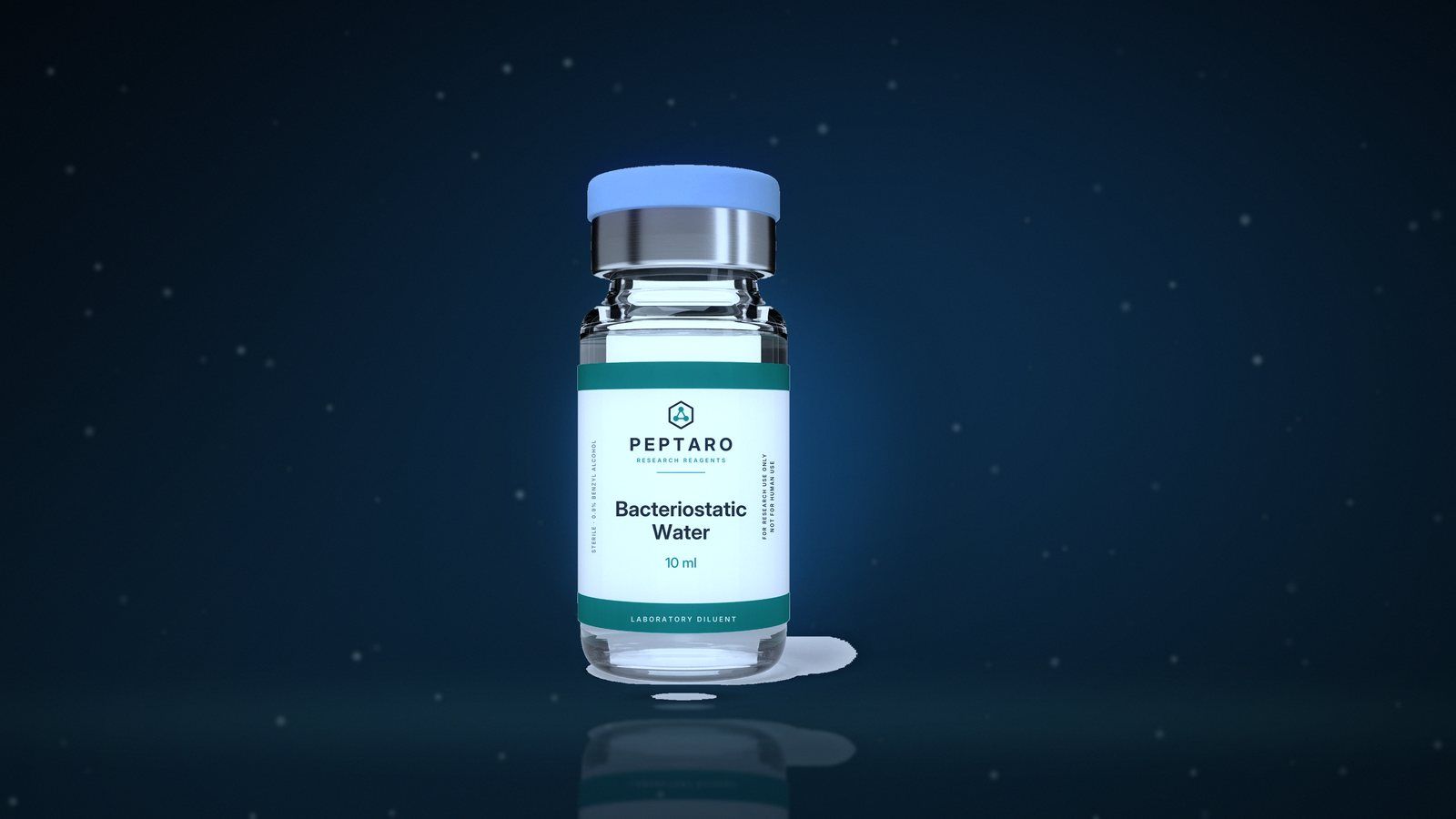
Bacteriostatic water is sterile water containing 0.9% (9 mg/mL) benzyl alcohol as a bacteriostatic preservative. It corresponds to the pharmacopoeial article Bacteriostatic Water for Injection, USP, and it is the standard laboratory diluent for reconstituting lyophilised research peptides. The shortened form bac water is used interchangeably in laboratory supply catalogues.
The critical word is bacteriostatic, not bactericidal. Benzyl alcohol suppresses the proliferation of organisms introduced at the septum during needle entry; it does not sterilise a solution that is already contaminated. That distinction drives handling practice: bacteriostatic water does not rescue a compromised vial and is no substitute for aseptic technique.
Bacteriostatic Water vs Sterile Water
Sterile Water for Injection contains no bacteriostat, antimicrobial agent or added buffer, which is why it is presented as a single-use article. Bacteriostatic water is presented as a multiple-dose container precisely because the benzyl alcohol permits repeated withdrawals from one vial.
For peptide reconstitution the practical difference is economics and consistency: a 10ml vial of bac water covers many reconstitution sessions at a consistent 0.9% preservative concentration, whereas single-use sterile water must be discarded after each session. Neither article contains buffer salts; if the assay needs a defined pH, use the appropriate buffer system instead.
Why Bac Water Is Used to Reconstitute Peptides
Lyophilised research peptides ship as a dried cake because the solid form is dramatically more stable than any solution. Reconstitution returns the peptide to a workable liquid concentration, and the solvent used determines how long that solution stays usable. Benzyl alcohol-preserved water suppresses microbial growth in the reconstituted vial without interacting with the peptide itself at the concentrations involved.
Storage and Handling
Store unopened bacteriostatic water at room temperature, protected from light and temperature swings. Do not freeze it: freezing risks cracking the vial and offers no stability benefit. Once the septum is first pierced, the clock is set by the laboratory's own discard policy and the integrity of the aseptic technique used at each entry, not by a universal expiry.
Swab the stopper with alcohol before every needle entry, use a new sterile needle each time, and never leave a needle seated in the septum between sessions. These are the same practices that govern any multiple-dose laboratory article.
Buying Bacteriostatic Water in the UK
Peptaro supplies 10ml vials of bacteriostatic water (0.9% benzyl alcohol), sealed and securely packed for transit, dispatched same-day from the UK on orders placed before 3pm on a working day. It is an accessory to every lyophilised research peptide order: check the product page for current pricing and stock. All products, bac water included, are supplied for in-vitro laboratory research use only.
Research use only. For in-vitro laboratory research use only. Not for human or veterinary use. This article summarises published preclinical literature for laboratory researchers and is not medical advice.
Frequently asked questions
What is the difference between BAC water and normal water?
Bacteriostatic water is sterile water containing 0.9% (9 mg/mL) benzyl alcohol as a preservative. The preservative suppresses microbial growth introduced at the septum during needle entry, so one vial tolerates repeated withdrawals. Plain sterile water for injection has no preservative and is single-use once opened.
Where can I get bacteriostatic water in the UK?
Peptaro stocks 10ml vials of bacteriostatic water with same-day dispatch on orders placed before 3pm UK time. It is listed with the product catalogue and pairs with every lyophilised research peptide order.
Can bacteriostatic water be frozen?
No. Freezing risks vial cracking and degrades the benzyl alcohol preservative system. Store at room temperature away from light, and follow the laboratory discard policy once a vial is opened.