5-Amino-1MQ
10mg · 50mg
In Stock · Ready to Shipfrom £29.99from £0.70/mg
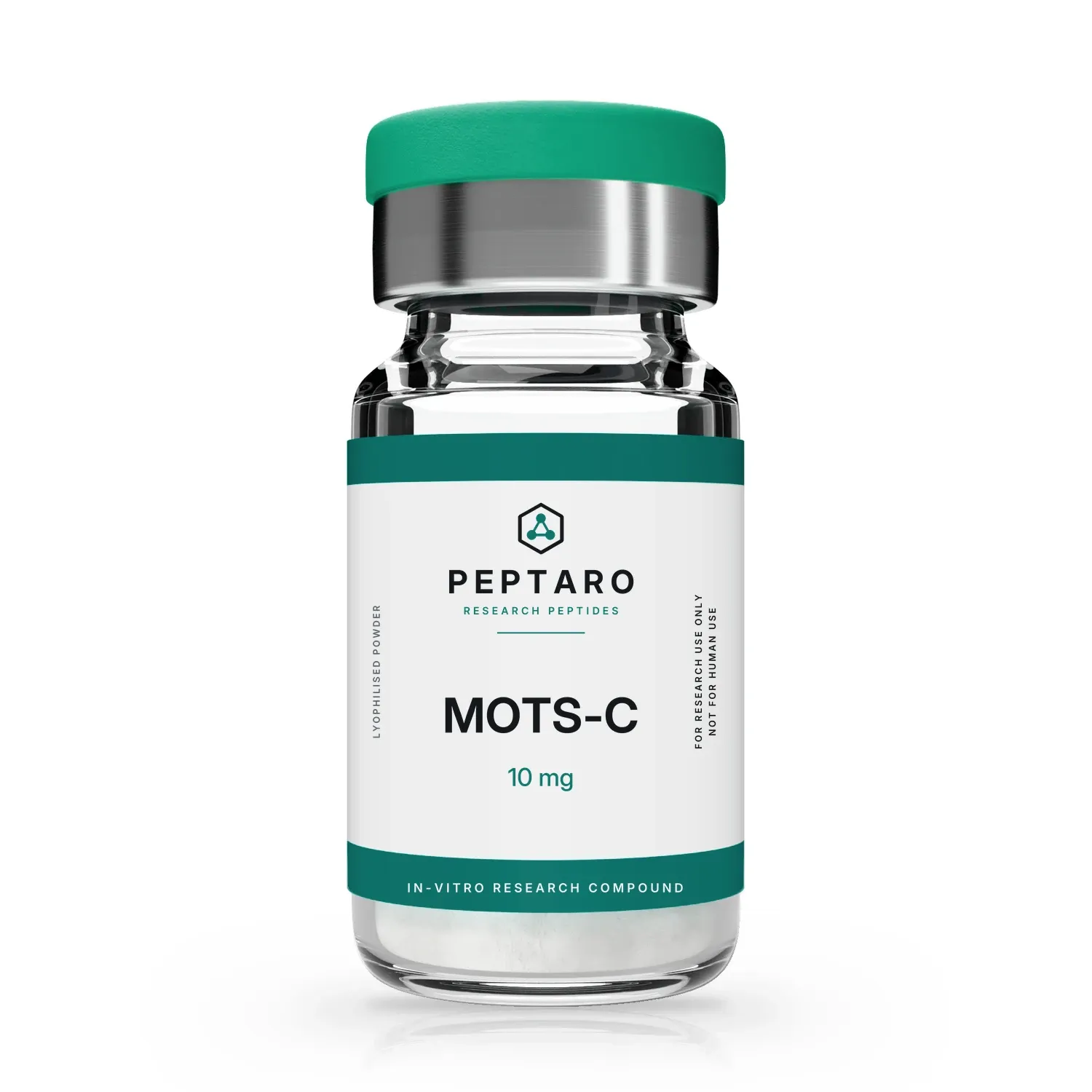
98.46% RP-HPLCMarfleet Analytical Services LtdBatch UKPL-217
£24.99£2.50/mg
In Stock · Ready to Ship
Minimum order £299.00 per basket: mix any products. Research kits meet it on their own.
Dispatched same day if ordered by 3pm (Mon–Fri) · Royal Mail Tracked 24
| Vials in basket | Per vial | Saving |
|---|---|---|
| 1–2 | £24.99 | — |
| 3+ | £23.74 | 5% |
| 5+ | £22.99 | 8% |
| 10+ | £21.99 | 12% |
Discounts are basket-wide: mix any vials.
Documentation for each item ships with your order.
For in-vitro laboratory research use only. Not for human or veterinary use.
Documentation for each item ships with your order. The batch number printed on your vial matches it.
MOTS-C is a 16 amino acid mitochondrial-derived peptide encoded within the mitochondrial 12S rRNA region. Research has studied its role in metabolic regulation, including AMPK pathway activation and effects on glucose and fatty acid metabolism. As one of the first characterised mitochondrial-derived peptides, it has become a reference compound in metabolic and mitochondrial research. Lyophilised powder, third-party tested.
MOTS-C, also written MOTS-c or MOTS c, is a 16 amino acid peptide encoded in mitochondrial DNA, within the 12S rRNA gene. It is studied in metabolic and mitochondrial research, mainly for AMPK signalling. We supply it as lyophilised powder in 10mg and 40mg vials.
The sequence is MRWQEMGYIFYPRKLR. The formula is C₁₀₁H₁₅₂N₂₈O₂₂S₂, the molecular weight 2174.5 g/mol and the CAS number 1627580-64-6. The name stands for mitochondrial open reading frame of the 12S rRNA type-c. Lee and colleagues (Cell Metab, 2015) found it after humanin, the first signalling peptide mapped to a short open reading frame in mitochondrial DNA.
Typical designs look at AMPK signalling, folate cycle and purine synthesis flux, skeletal muscle metabolism and mitochondrial-to-nuclear signalling, in cell and rodent models.
Both are encoded inside mitochondrial DNA, not the nuclear genome. Humanin, a 24 residue peptide from the 16S rRNA region, was found first and is studied mainly for cytoprotective and anti-apoptotic signalling. MOTS-C comes from the 12S rRNA region and acts through the folate cycle and AMPK. Choose MOTS-C for metabolic regulation or mitochondrial-nuclear signalling, and humanin for cytoprotection.
MOTS-C is a 16 amino acid mitochondrial derived peptide encoded by a short open reading frame within the 12S rRNA (MT-RNR1) region of mitochondrial DNA, with the sequence Met-Arg-Trp-Gln-Glu-Met-Gly-Tyr-Ile-Phe-Tyr-Pro-Arg-Lys-Leu-Arg (MRWQEMGYIFYPRKLR). The name abbreviates mitochondrial open reading frame of the twelve S rRNA type-c, and the compound appears in most primary literature as MOTS-c. It was characterised by Lee and colleagues in Cell Metabolism in 2015, which identified the coding sORF as a 51 base pair frame carrying a strong Kozak sequence and reported skeletal muscle as the apparent primary target tissue. At the time of that paper, humanin was the only other peptide whose short open reading frame had been mapped to the mitochondrial genome, making MOTS-C the second characterised member of the mitochondrial derived peptide (MDP) family and the first assigned a defined metabolic mechanism. Mechanistically, MOTS-C acts on the folate-methionine cycle and the de novo purine biosynthesis pathway tethered to it. Metabolomic and microarray profiling showed depletion of 5-methyltetrahydrofolate and methionine with a corresponding rise in homocysteine, blockade of de novo purine synthesis, and accumulation of endogenous AICAR (5-aminoimidazole-4-carboxamide ribonucleotide), an AMP mimetic that activates AMP-activated protein kinase (AMPK). MOTS-C therefore functions as a retrograde mitochondrial-to-nuclear signalling molecule rather than a classical cell-surface receptor ligand. Kim et al. (Cell Metabolism, 2018) demonstrated that under metabolic stress such as glucose restriction, MOTS-C translocates from its extranuclear pool into the nucleus, co-precipitates with NRF2, and binds antioxidant response element (ARE) sequences to regulate stress-adaptive nuclear gene expression. Reynolds et al. (Nature Communications, 2021) reported that endogenous MOTS-C expression rises in human skeletal muscle following exercise. For researchers, MOTS-C is the reference compound for mitokine biology, AMPK activation driven from upstream nucleotide metabolism, and mitochondrial-nuclear crosstalk.
Store MOTS-C powder at -20°C, away from light and moisture, for up to 24 months. After reconstitution, keep the solution at 2-8°C and use it within 4 weeks. For longer storage, freeze single-use aliquots at -20°C and avoid repeated freeze-thaw cycles.
Vials are sold on their own, without bacteriostatic water for mixing or other supplies.
How to reconstitute and handle
To mix MOTS-C powder, let the vial and the bacteriostatic water reach room temperature and swab both stoppers with alcohol. Add the water slowly down the inside wall of the vial and swirl gently until dissolved. Do not shake or vortex. The solution should be clear and colourless.
For the full method, see the peptide reconstitution guide and the reconstitution calculator.
Published research on MOTS-C is indexed on PubMed. See our full UK buyer's guide for MOTS-C, UK buyer's guide for MOTS-c 10mg and UK buyer's guide for MOTS-c CoA.
| CAS number | 1627580-64-6 |
|---|---|
| Molecular formula | C₁₀₁H₁₅₂N₂₈O₂₂S₂ |
| Molecular weight | 2174.5 g/mol |
| Sequence | MRWQEMGYIFYPRKLR |
| Form | White lyophilised powder |
| Release specification | ≥98.0% |
Store sealed lyophilised vials at −20 °C, protected from light and moisture. For preparation, aliquoting and storage of reconstituted stock, see the laboratory reconstitution guide and the concentration calculator.
MOTS-C activates AMPK indirectly, through the folate-methionine cycle rather than by binding AMPK itself. Published metabolomic work showed that MOTS-C depletes 5-methyltetrahydrofolate and blocks the de novo purine biosynthesis pathway tethered to it, which causes endogenous AICAR (5-aminoimidazole-4-carboxamide ribonucleotide) to accumulate. AICAR is an AMP mimetic, and its accumulation activates AMP-activated protein kinase.
A mitochondrial derived peptide (MDP) is a small bioactive peptide encoded by a short open reading frame inside mitochondrial DNA rather than the nuclear genome. Humanin was the first to be identified, MOTS-C the second, and the SHLP series followed. MDPs are studied as retrograde signalling molecules, meaning they carry information outward from the mitochondrion to the rest of the cell and to the nucleus.
No. MOTS-C and humanin are distinct peptides encoded in different regions of mitochondrial DNA and studied for different mechanisms. MOTS-C is a 16 residue peptide from the 12S rRNA region associated with the folate-methionine cycle and AMPK activation. Humanin is a 24 residue peptide from the 16S rRNA region studied predominantly for cytoprotective and anti-apoptotic signalling.
The human MOTS-C sequence is MRWQEMGYIFYPRKLR, that is Met-Arg-Trp-Gln-Glu-Met-Gly-Tyr-Ile-Phe-Tyr-Pro-Arg-Lys-Leu-Arg. It translates from a 51 base pair short open reading frame within the mitochondrial 12S rRNA gene and gives a molecular formula of C₁₀₁H₁₅₂N₂₈O₂₂S₂ at 2174.5 g/mol.
Human MOTS-C research to date is observational, measuring endogenous peptide levels rather than administering the compound. Reynolds et al. (Nature Communications, 2021) reported that endogenous MOTS-C expression rises in human skeletal muscle after exercise, and separate cohort work has compared circulating levels across metabolic states. Interventional evidence remains preclinical, and MOTS-C is not an approved medicine in any jurisdiction. It is supplied strictly for laboratory research use.
Each vial contains MOTS-C as a lyophilised (freeze-dried) powder. MOTS-C has the molecular formula C₁₀₁H₁₅₂N₂₈O₂₂S₂, a molecular weight of 2174.5 g/mol, and CAS number 1627580-64-6. The current 10mg batch is UKPL-217, verified at 98.46% purity by Marfleet Analytical Services using HPLC.
You can buy MOTS-C online from Peptaro. MOTS-C is for sale in 10mg and 40mg vials from UK stock. Orders placed before 3pm (UK time) on a working day are dispatched the same day, and tracked UK delivery is free on every order.
98.46% by RP-HPLC for batch UKPL-217, against a 98.0% specification. Marfleet Analytical Services ran the test, and the certificate is published in the certificate section.
It can be bought in the UK for in-vitro laboratory research. MOTS-C is not an approved medicine and is sold for research use only, to buyers aged 18 or over.
Store sealed lyophilised vials at −20 °C, protected from light and moisture. For preparing and aliquoting stock solutions, see the laboratory reconstitution guide.
Orders placed by 3pm Monday to Friday (excluding bank holidays) are dispatched the same working day by Royal Mail Tracked 24. Delivery is free, tracked and cold-packed. The minimum order is £299.
10mg · 50mg
In Stock · Ready to Ship
1500mg
In Stock · Ready to Ship
600mg/ml,10ml
Not yet available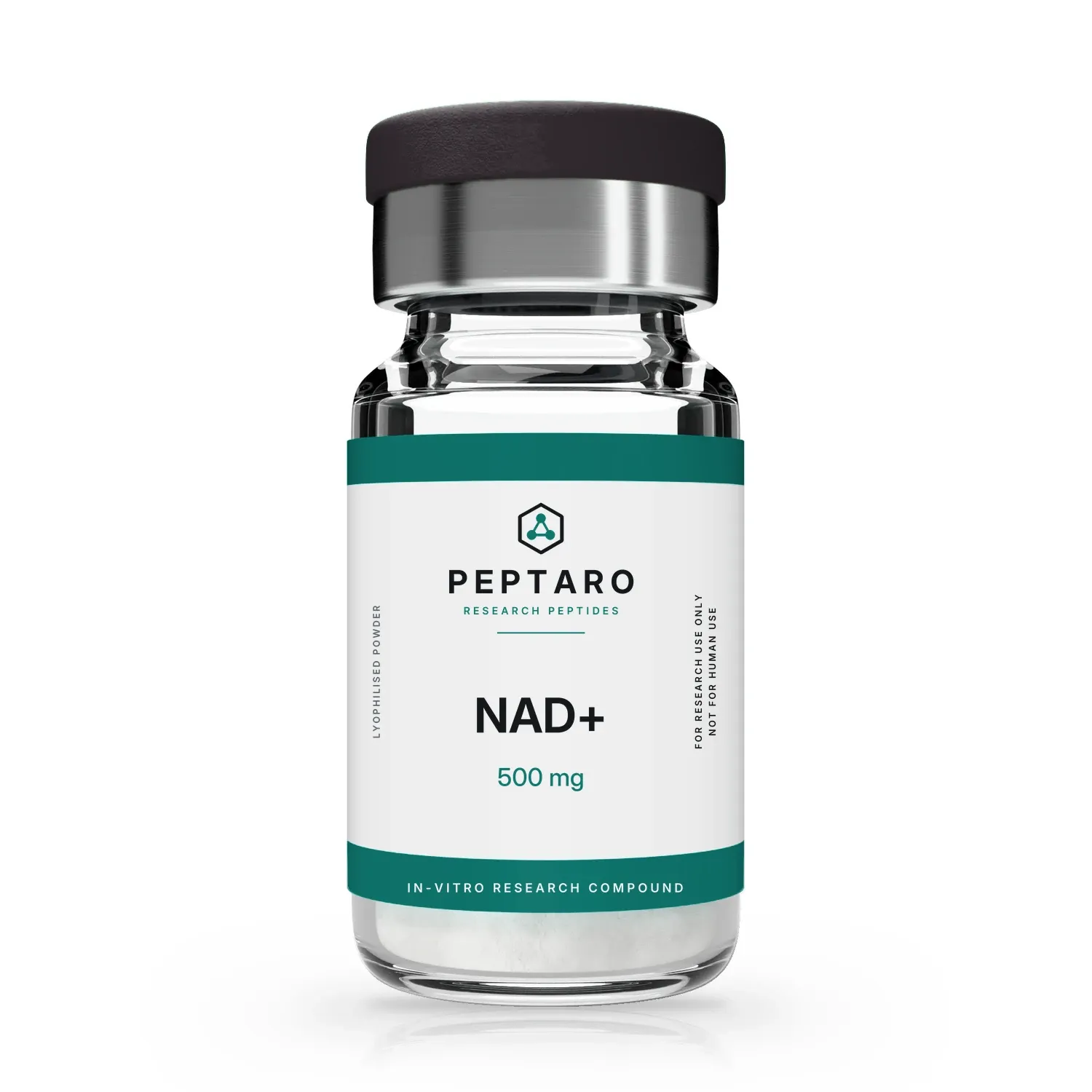
500mg · 1000mg
In Stock · Ready to ShipResearch use only. For in-vitro laboratory research use only. Not for human or veterinary use. By continuing you confirm you are 18+ and purchasing for laboratory research.