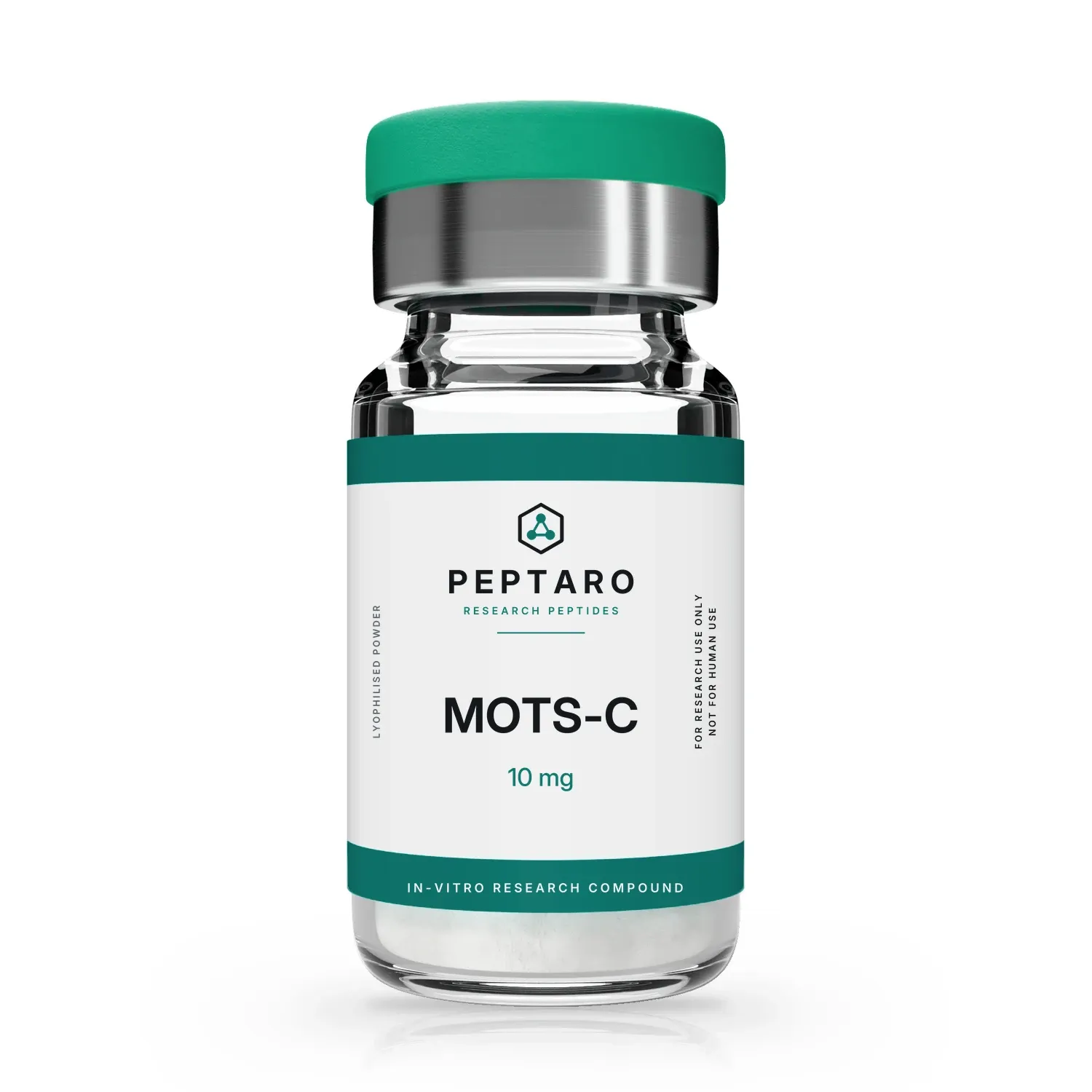
MOTS-C: Mitochondrial-Derived Peptide Research Guide

What is MOTS-C?
MOTS-C (Mitochondrial Open reading frame of the Twelve S rRNA-C) is a 16-amino-acid peptide encoded within the mitochondrial 12S ribosomal RNA region of human mitochondrial DNA. It was identified and characterised in 2015 by Lee and colleagues at the University of Southern California, published in Cell Metabolism. MOTS-C belongs to a small family of mitochondrial-derived peptides (MDPs) that includes Humanin, and it has rapidly become one of the most actively studied tools in research examining mitochondrial-nuclear signalling crosstalk.
Mitochondrial-Derived Peptide Discovery
Mitochondrial-derived peptides are a relatively recent area of research. Before the identification of Humanin in 2001 and MOTS-C in 2015, the mitochondrial genome was thought to encode only the 13 proteins of the electron transport chain plus the necessary rRNAs and tRNAs. The discovery of small open reading frames within the mitochondrial 16S and 12S rRNA regions that produce biologically active peptides has changed this understanding. MOTS-C is one of the best-characterised members of this peptide class.
AMPK Pathway and Metabolic Research
MOTS-C is studied primarily in the context of metabolic homeostasis and energy sensing. Published research indicates that MOTS-C activates AMP-activated protein kinase (AMPK), a key cellular energy sensor that responds to elevated AMP/ATP ratios. AMPK activation upregulates catabolic pathways such as fatty acid oxidation and glucose uptake, while downregulating anabolic pathways such as protein and lipid synthesis. MOTS-C research therefore overlaps with broader research on AMPK modulators such as metformin, AICAR, and exercise mimetics, with distinct mechanistic features.
Research Applications
MOTS-C has been studied in models of insulin sensitivity, obesity-induced metabolic dysfunction, exercise physiology, and ageing biology. The peptide has shown effects in mouse models on glucose tolerance, weight regulation under high-fat diet conditions, and exercise capacity. It has also been investigated in models of bone metabolism and immune function. Research interest has expanded to include the role of mitochondrial-derived peptides as endocrine signalling molecules with effects beyond the mitochondria of origin.
Laboratory Handling
MOTS-C is supplied as lyophilised powder. Store at -20°C prior to reconstitution. Reconstitute with bacteriostatic water by slowly injecting the diluent down the side of the vial and gently swirling. Store reconstituted solutions at 2-8°C and use within 4 weeks. Avoid repeated freeze-thaw cycles which compromise peptide integrity.
Sourcing in the UK
Peptaro supplies research-grade MOTS-C 10mg with third-party batch documentation shipped with every order. Same-day UK dispatch on orders placed before 3pm UK time, free tracked UK delivery on every order. For in-vitro laboratory research use only. Vial sizes and pricing are listed on the MOTS-C UK buy page.
Research use only. For in-vitro laboratory research use only. Not for human or veterinary use. This article summarises published preclinical literature for laboratory researchers and is not medical advice.