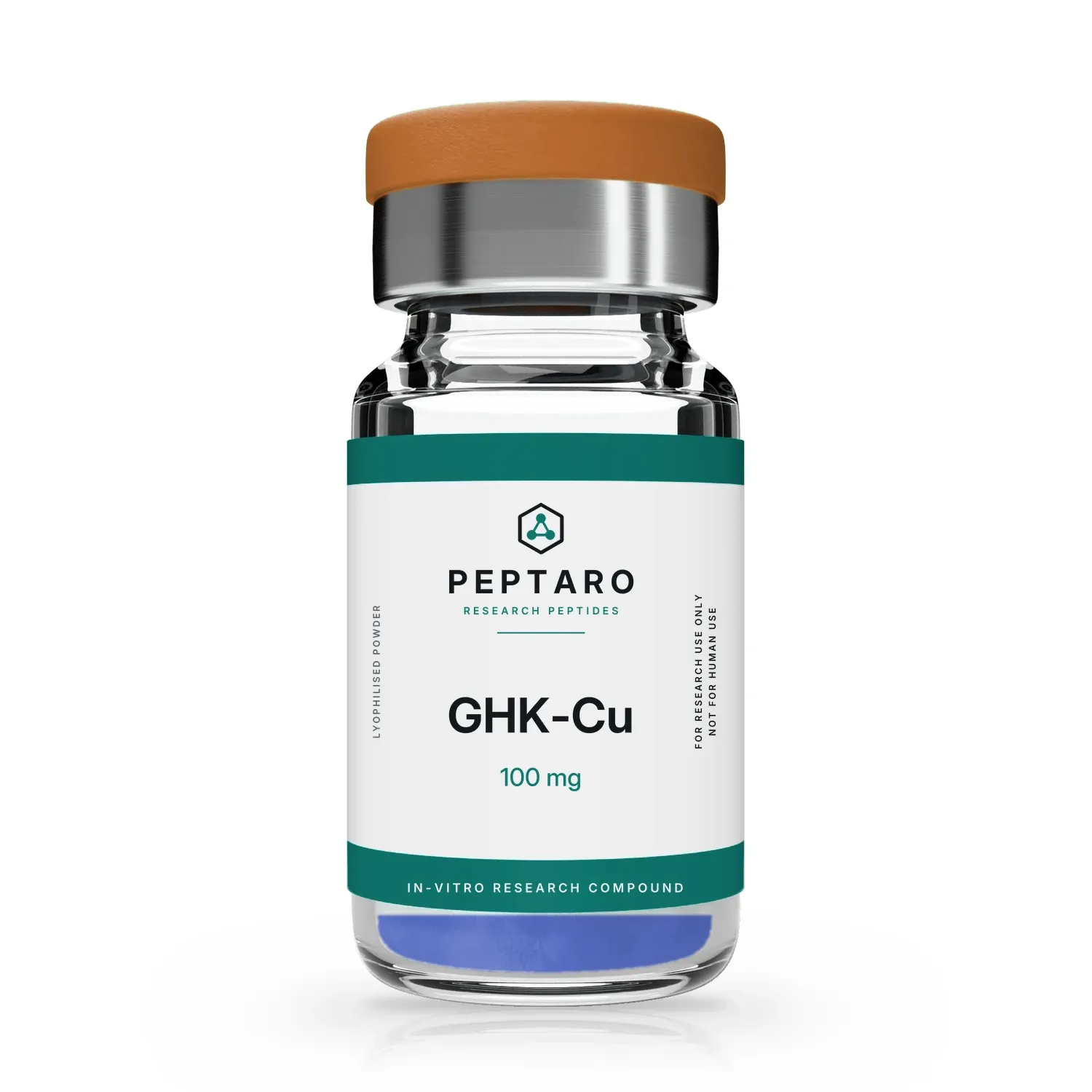
GHK-Cu 100mg UK
Peptaro Research Team
The 100mg vial is batch UKPL-377, tested by Marfleet Analytical Services Ltd, and is our lowest-cost-per-mg copper peptide at £0.33.
Shop GHK-Cu 100mg View Quality Standards
GHK-Cu 100mg: bulk size
This is the same compound as the 50mg, a copper(II) complex of glycyl-histidyl-lysine, but in a larger lot from a different batch. The certificate reports purity as above 99% and no measured content. A hundred milligrams is a substantial amount for a research peptide, so it is aimed at labs running long screening series or preparing stock solutions for many experiments. Supplied for in-vitro laboratory research only, not for human or veterinary use.
Published research on glycyl-histidyl-lysine copper complex is indexed on PubMed.
Intended Use: Strictly for in-vitro laboratory research. Not for use in humans or animals. This product has not been evaluated by the MHRA or FDA.
Research Areas
- Extended fibroblast culture series
- Stock-solution preparation for screening
- Copper homeostasis models
- Analytical reference material
Why buy GHK-Cu 100mg from Peptaro
Batch-specific test results
Check the reported method, result and testing source for each batch.
Published batch certificates
Review available lab reports and CoAs on the product page.
UK cold-chain storage
Stored at -20°C from arrival through dispatch.
Same-day UK dispatch
Royal Mail Tracked 24, free tracked UK delivery on every order.
Research use only. For in-vitro laboratory research use only. Not for human or veterinary use. This article summarises published preclinical literature for laboratory researchers and is not medical advice.
Frequently asked questions
Is the 100mg a different batch from the 50mg?
Yes. This is UKPL-377; the 50mg is UKPL-458. Check each certificate.
What does the certificate say about purity?
Above 99%. No exact decimal is given, so we do not invent one.
How should a bulk vial be handled?
Keep the sealed powder cold and dry, and open it only when needed to limit moisture uptake.
Is it for human use?
No. In-vitro research only.