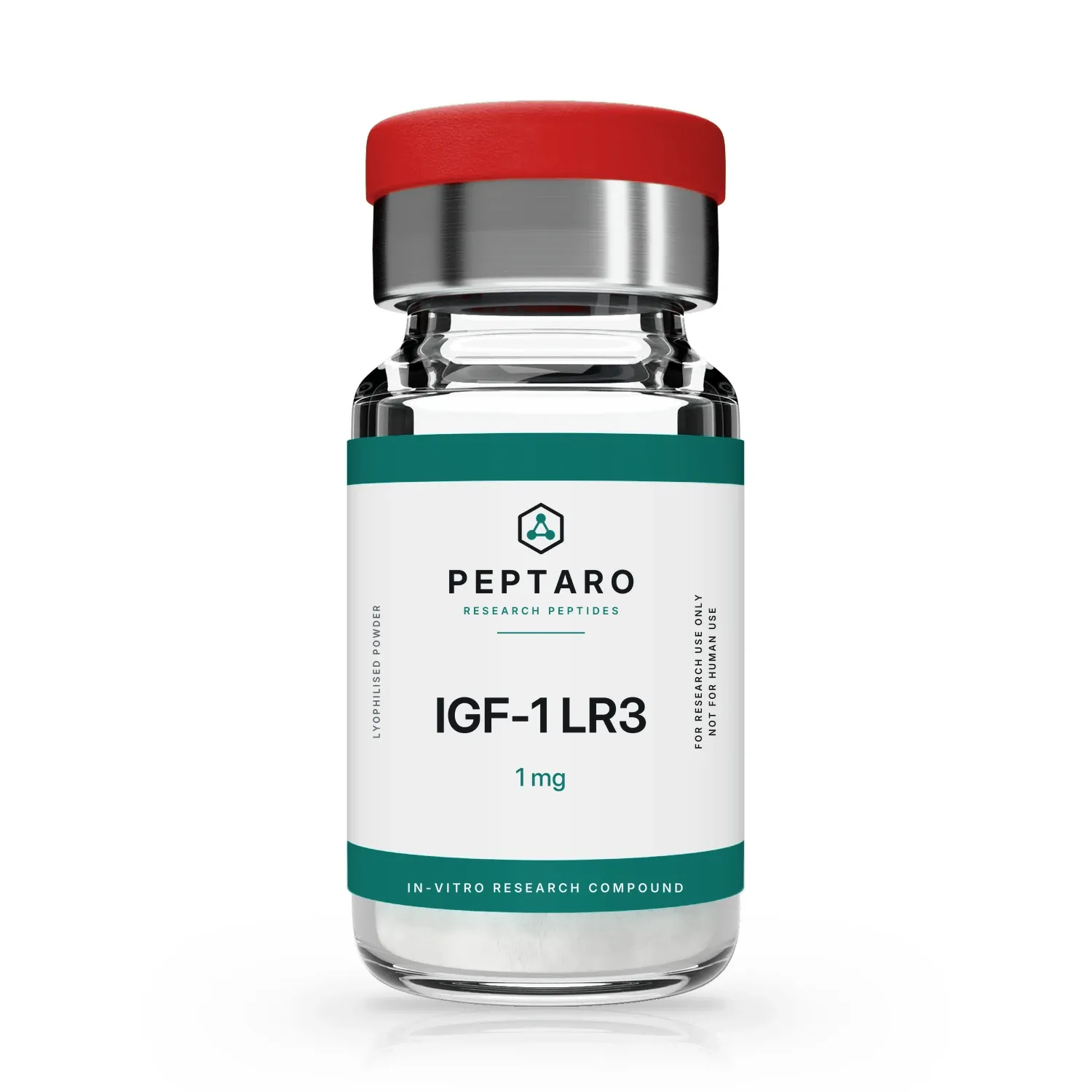
IGF-1 LR3 Purity and CoA UK
Peptaro Research Team
IGF-1 LR3 is a large protein-scale analogue of about 83 residues, so its certificate needs different reading from a short peptide. Batch UKPL-449 records 98.134% purity and a mass of 9113.0.
Shop IGF-1 LR3 CoA View Quality Standards
Why a 9 kDa analogue is hard to certify
At around nine thousand daltons, IGF-1 LR3 has multiple disulfide bonds, and misfolded variants can have the same mass as the correct one. A mass match shows the sequence is right but not that the folding is. The record gives 1.08mg against a 1mg label claim and an analysis date of 06/03/2026, and it names no laboratory. We therefore describe it as certificate-stated and recommend buyers weigh that. Supplied for in-vitro laboratory research only, not for human or veterinary use.
Published research on IGF-1 LR3 long R3 insulin-like growth factor is indexed on PubMed.
Intended Use: Strictly for in-vitro laboratory research. Not for use in humans or animals. This product has not been evaluated by the MHRA or FDA.
Research Areas
- Disulfide folding verification
- Intact-mass analysis of large peptides
- IGF-1R binding assay reagent qualification
- Aggregation and stability studies
Why buy IGF-1 LR3 CoA from Peptaro
Batch-specific test results
Check the reported method, result and testing source for each batch.
Published batch certificates
Review available lab reports and CoAs on the product page.
UK cold-chain storage
Stored at -20°C from arrival through dispatch.
Same-day UK dispatch
Royal Mail Tracked 24, free tracked UK delivery on every order.
Research use only. For in-vitro laboratory research use only. Not for human or veterinary use. This article summarises published preclinical literature for laboratory researchers and is not medical advice.
Frequently asked questions
Does a mass match prove correct folding?
No. Misfolded isomers can share the mass. Folding needs a separate assay.
What does the record show?
98.134% purity, 1.08mg against a 1mg label claim and a mass of 9113.0.
Is the lab named?
No, so we do not describe the figures as independent.
Is it for human use?
No. In-vitro research only.