Epithalon Peptide: Research Guide (Ala-Glu-Asp-Gly)
Key Takeaways
- Epithalon is the tetrapeptide Ala-Glu-Asp-Gly, designed from the bovine pineal preparation Epithalamin. The defining study reports induction of telomerase activity and telomere elongation in cultured human fibroblasts (Khavinson et al., Bull Exp Biol Med, 2003).
- The lifespan literature reports extension of maximum, not mean, lifespan: +12.3% maximum and +13.3% in the last decile of survivors in one mouse study (Anisimov et al., Biogerontology, 2003).
- The evidence base is concentrated in one affiliated research cluster, is largely Russian-language, rests on small samples, and has sparse independent Western replication. Epithalon holds no marketing authorisation anywhere.
- Supplied for in-vitro laboratory research only, no dosing information, no human-use claims, no therapeutic promises.
What is Epithalon?
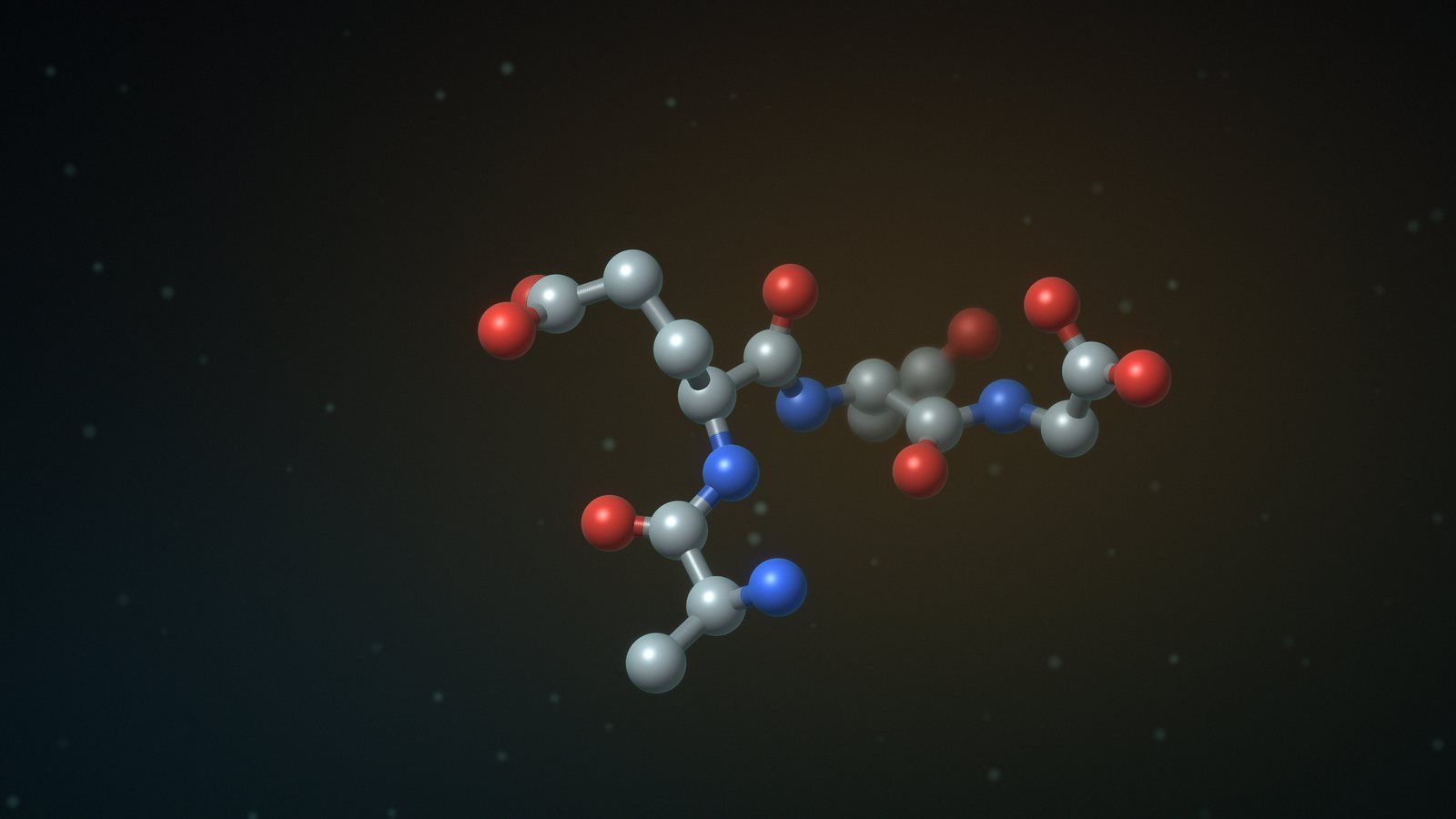
Epithalon is a synthetic tetrapeptide with the sequence alanine-glutamic acid-aspartic acid-glycine, written Ala-Glu-Asp-Gly or AEDG. It has the molecular formula C₁₄H₂₂N₄O₉, a molecular weight of 390.35 g/mol and CAS number 307297-39-8. Four residues is a deliberately minimal design: the peptide is small enough to enter cells without a transporter, which matters because the research programme behind it proposes that very short peptides interact directly with DNA regulatory regions to shift gene expression.
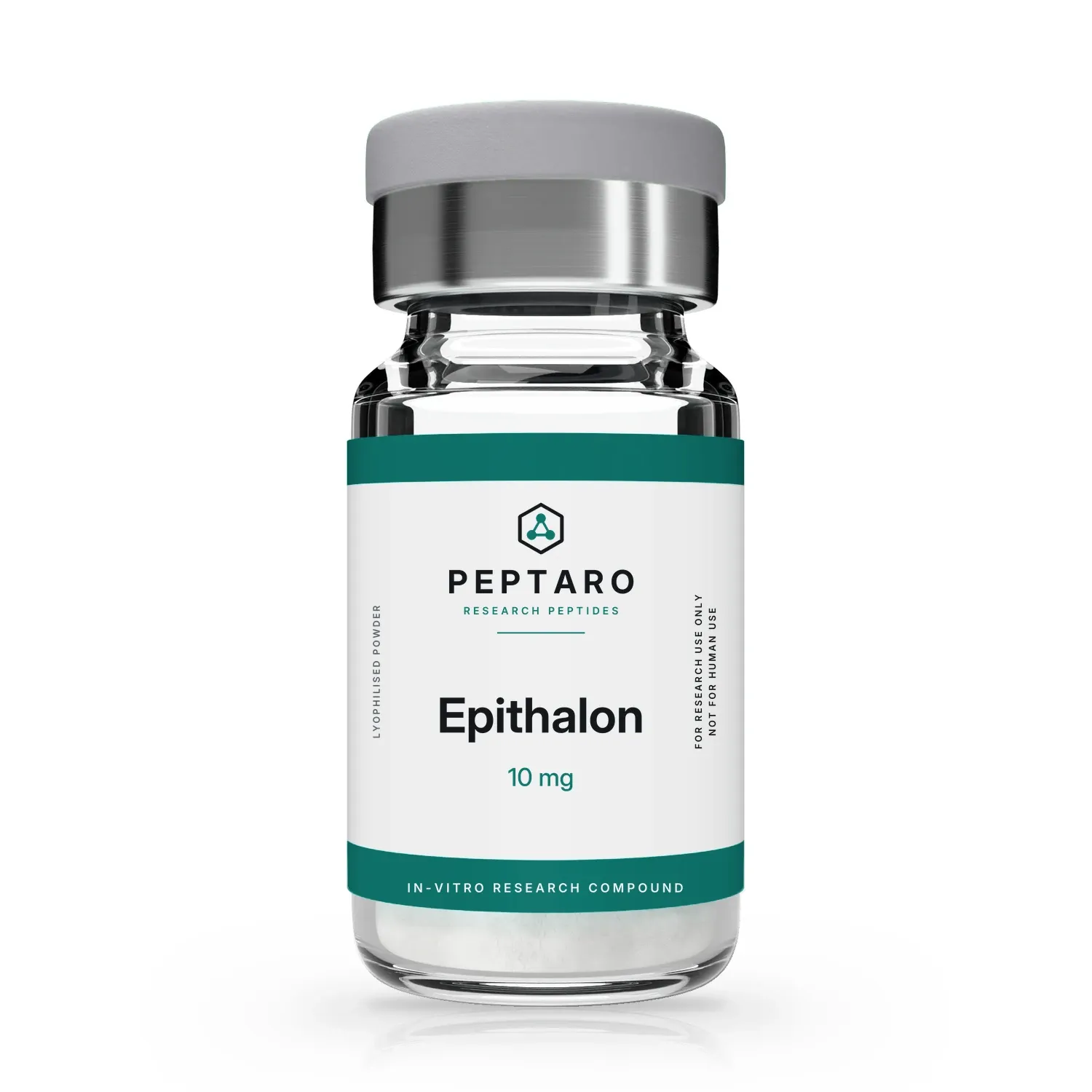
Peptaro supplies Epithalon 10mg as research-grade lyophilised powder for in-vitro laboratory use only.
Origin: the Pineal Bioregulator Programme
Epithalon comes out of the St. Petersburg Institute of Bioregulation and Gerontology, where Vladimir Khavinson's group spent decades studying 'peptide bioregulators', short peptides claimed to restore the function of specific tissues. The starting material was Epithalamin, a polypeptide preparation extracted from bovine pineal glands, which was studied in elderly populations from the 1980s onwards. Epithalon was designed as a synthetic tetrapeptide standing in for the component of that extract credited with its biological activity.
The theoretical framing, that a four-amino-acid peptide finds its target gene regulatory regions and modulates transcription, is unorthodox by mainstream pharmacology standards, and it is worth holding that in mind when reading the primary literature, most of which originates from the same cluster that designed the compound.
Telomerase and Telomere Research
The best-characterised strand of Epithalon research concerns telomeres. Khavinson, Bondarev and Butyugov (Bull Exp Biol Med, 2003) added the peptide to cultures of telomerase-negative human fetal fibroblasts and reported induction of the telomerase catalytic subunit, measurable telomerase enzyme activity, and an increase in mean telomere length of roughly one third relative to control cells. Companion work from the same group reported increased proliferative activity in retinal and pigmented epithelial cells.
Encouragingly, replication outside the originating group is beginning to appear: a 2025 independent in-vitro study across additional human cell lines reported telomere elongation through both telomerase upregulation and the alternative lengthening of telomeres (ALT) pathway, with normal cells requiring substantially longer incubations than telomerase-positive cancer lines. Early days, but the telomere claim is no longer resting on a single laboratory.
Lifespan and Tumour Studies
The lifespan literature is more sober than summaries of it usually suggest. Anisimov and colleagues (Biogerontology, 2003) treated female Swiss-derived SHR mice with Epitalon from three months of age and found no change in food consumption, body weight or mean lifespan. What did shift were the tail statistics: maximum lifespan extended by 12.3%, and the lifespan of the last 10% of survivors by 13.3%.
The Pineal and Circadian Connection
The circadian strand of the story runs mostly through the parent preparation rather than the tetrapeptide itself, and it is worth being precise about that. Korkushko and colleagues (Bull Exp Biol Med, 2004) studied Epithalamin in elderly subjects and reported that it raised nocturnal plasma melatonin and partially restored the circadian rhythm of pineal melatonin production.
Because Epithalon was designed as the active core of Epithalamin, those findings are routinely quoted in Epithalon summaries. The honest reading is that the melatonin-rhythm evidence belongs to the extract, and direct circadian work with the tetrapeptide is comparatively thin. A 2025 review in the International Journal of Molecular Sciences catalogues the field and is a useful single entry point to the whole literature.
Reading the Evidence Honestly
The structural weaknesses in this literature are not cosmetic. The preponderance of primary data originates from one affiliated research cluster and is published in Russian-language journals; sample sizes are small; endpoints vary between studies; and independent Western replication is only now starting to appear. Epithalon holds no marketing authorisation in any jurisdiction, and no randomised controlled trial supports any therapeutic use. That is not a criticism of the compound, it is a description of where the evidence stands, and it is the reason this guide carries no dosing information, no human-use claims and no outcome promises. The material is supplied for in-vitro laboratory research only.
Epithalon vs Pinealon
Within the same St. Petersburg bioregulator programme, Pinealon is the nearest comparator: the tripeptide Glu-Asp-Arg, whose literature runs through neuroprotection, antioxidant endpoints and gene-expression models. Epithalon's literature runs through telomeres and ageing biomarkers instead. The two share a proposed mechanism and the same evidence-base structure, but they are not interchangeable, a protocol built on the telomere literature needs Epithalon, and one built on the neuroprotection literature needs Pinealon. Researchers working with the wider Russian nootropic peptide family will also find Semax relevant, though it comes from an entirely different design lineage.
Laboratory Handling
Store the lyophilised vial at -20°C, protected from light and moisture. Reconstitute by slowly injecting Bacteriostatic Water down the inner wall of the vial and swirling gently until dissolved; never shake or vortex. The tetrapeptide contains no methionine, cysteine or tryptophan, so it has no strongly oxidation-prone residues and sterility is the practical constraint on solution life. Store the reconstituted solution at 2-8°C and use within 4 weeks. See the peptide reconstitution guide and the peptide storage guide for full methodology.
Sourcing in the UK
Peptaro supplies research-grade Epithalon 10mg as lyophilised powder, supplier-tested, batch UKPL-9501 at 98.5% purity by HPLC, with the supplier certificate of analysis available on request. Independent third-party verification in progress, and the independent certificate will be published on the product page once complete. Same-day UK dispatch on orders placed before 3pm UK time, free tracked UK delivery on every order. For in-vitro laboratory research use only, not for human consumption.
References
- [ 1 ] Epithalon peptide induces telomerase activity and telomere elongation in human somatic cells . Bull Exp Biol Med ( 2003 ). View →
- [ 2 ] Effect of Epitalon on biomarkers of aging, life span and spontaneous tumor incidence in female Swiss-derived SHR mice . Biogerontology ( 2003 ). View →
- [ 3 ] Inhibitory effect of peptide Epitalon on colon carcinogenesis induced by 1,2-dimethylhydrazine in rats . Cancer Lett ( 2002 ). View →
- [ 4 ] Effect of peptide preparation epithalamin on circadian rhythm of epiphyseal melatonin-producing function in elderly people . Bull Exp Biol Med ( 2004 ). View →
- [ 5 ] Overview of Epitalon, Highly Bioactive Pineal Tetrapeptide with Promising Properties . Int J Mol Sci ( 2025 ). View →
Research use only. For in-vitro laboratory research use only. Not for human or veterinary use. This article summarises published preclinical literature for laboratory researchers and is not medical advice.
Frequently asked questions
What is Epithalon?
Epithalon (also written Epitalon) is a synthetic tetrapeptide with the sequence Ala-Glu-Asp-Gly, molecular weight 390.35 g/mol and CAS number 307297-39-8. It was developed at the St. Petersburg Institute of Bioregulation and Gerontology as a tetrapeptide modelled on the active component of Epithalamin, a polypeptide preparation extracted from bovine pineal glands. It is supplied as a lyophilised powder for in-vitro laboratory research only and holds no marketing authorisation in any jurisdiction.
Does Epithalon lengthen telomeres?
In cell culture, the defining report is Khavinson, Bondarev and Butyugov (Bull Exp Biol Med, 2003), which described induction of the telomerase catalytic subunit, restored telomerase activity and increased mean telomere length by roughly one third in human fetal fibroblasts. Recent independent in-vitro work in further human cell lines reports similar elongation through telomerase upregulation or the alternative lengthening of telomeres pathway. These are cell-culture findings from a small literature; they are not human outcome data.
Is Epithalon legal to buy in the UK?
Epithalon is not a Controlled Drug, and it may lawfully be bought and held in the UK as a research chemical for in-vitro laboratory use. It is not a licensed medicine anywhere, and under the Human Medicines Regulations 2012 it cannot lawfully be sold or supplied for human consumption. Purchasers must be 18 or over and confirm research-only use at checkout.
How do I reconstitute Epithalon?
Allow the vial to reach room temperature, then inject bacteriostatic water slowly down the inner glass wall, never directly onto the powder, and swirl gently until dissolved. Do not shake or vortex. The tetrapeptide has no oxidation-prone residues, so sterility is the practical constraint: store the reconstituted solution at 2-8°C and use within 4 weeks. Research use only.