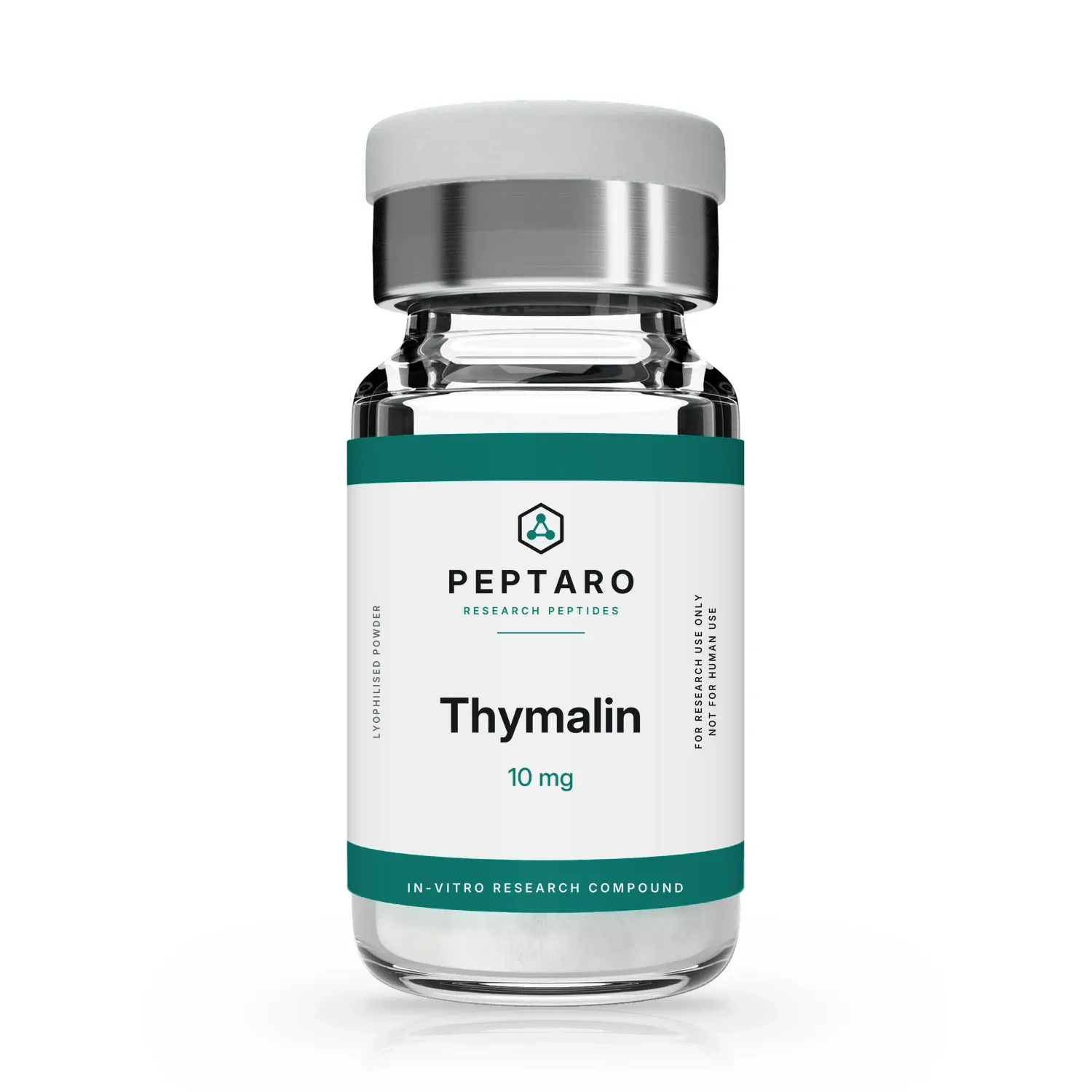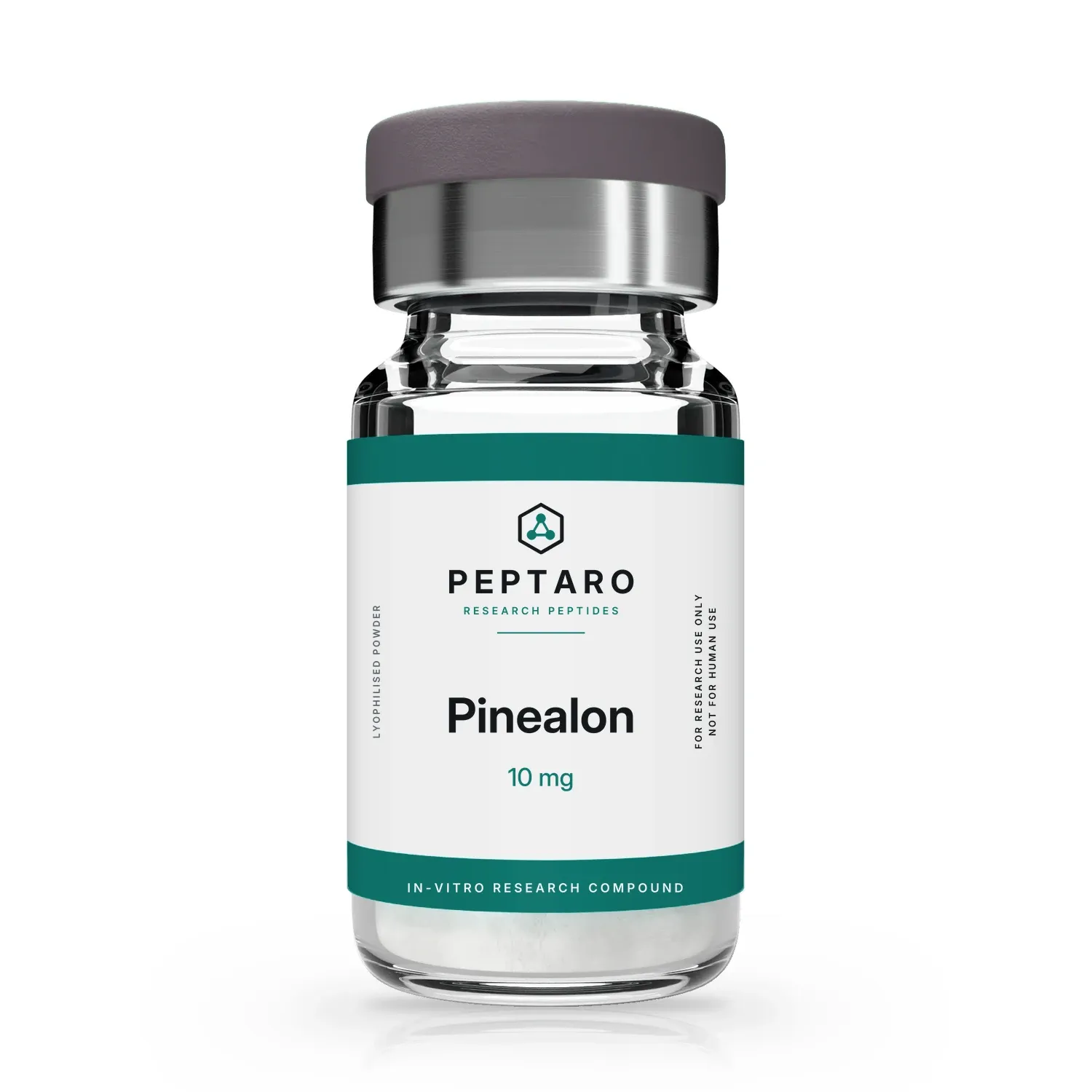
Pinealon
10mg
In Stock · Ready to Ship£29.99£3.00/mg
98.5% RP-HPLCJanoshikBatch UKPL-9501
£17.99£1.80/mg
Out of stock
Minimum order £299.00 per basket: mix any products. Research kits meet it on their own.
Dispatched same day if ordered by 3pm (Mon–Fri) · Royal Mail Tracked 24
| Vials in basket | Per vial | Saving |
|---|---|---|
| 1–2 | £17.99 | — |
| 3+ | £17.09 | 5% |
| 5+ | £16.55 | 8% |
| 10+ | £15.83 | 12% |
Discounts are basket-wide: mix any vials.
Documentation for each item ships with your order.
For in-vitro laboratory research use only. Not for human or veterinary use.
Documentation for each item ships with your order. The batch number printed on your vial matches it.
Epithalon is a synthetic tetrapeptide with the sequence Ala-Glu-Asp-Gly, developed from research into endogenous peptide bioregulators. Studies have examined its reported effects on telomerase activity, telomere length and the circadian regulation of melatonin and cortisol secretion in animal models, and it is among the most widely referenced peptide bioregulators in ageing research literature. Supplied as lyophilised powder, supplier-tested, with the certificate published on this page and independent third-party verification pending.
Epithalon is a synthetic tetrapeptide, Ala-Glu-Asp-Gly, from research into peptide bioregulators. Studies have examined its reported effects on telomerase activity and telomere length, and on melatonin and cortisol rhythms in animal models.
It is also written Epitalon or Epithalone, and abbreviated AEDG. Its formula is C₁₄H₂₂N₄O₉, its molecular weight 390.35 g/mol and its CAS number 307297-39-8. Vladimir Khavinson's group at the St Petersburg Institute of Bioregulation and Gerontology designed it from Epithalamin, a polypeptide extract of bovine pineal gland studied since the early 1980s.
The group proposes that very short peptides act directly on gene expression, and that four residues are small enough to enter cells unaided. That is a hypothesis of the programme, not an established mechanism. Each Epithalon 10mg vial holds white lyophilised powder.
Typical in-vitro work measures telomerase activity and telomere length in cultured human cells. Animal work covers lifespan, survival curves, ageing biomarkers and tumour incidence in rodents. Most primary data come from one research cluster, much of it published in Russian, and independent replication is only beginning. Epithalon is not a licensed medicine in the UK, the EU or the United States.
Both are short synthetic bioregulator peptides from the same St Petersburg programme. Epithalon is the tetrapeptide Ala-Glu-Asp-Gly, designed from the pineal extract Epithalamin, and its literature centres on telomerase and ageing in mice. Pinealon is the tripeptide Glu-Asp-Arg, and its literature leans towards neuroprotection and antioxidant endpoints. Both literatures come mostly from one research cluster, with little outside replication. They are not interchangeable. A design built on the telomere work needs Epithalon; one built on the neuroprotection work needs Pinealon.
Epithalon, also written Epitalon, is a synthetic tetrapeptide with the sequence Ala-Glu-Asp-Gly (AEDG), molecular formula C₁₄H₂₂N₄O₉, molecular weight 390.35 g/mol and CAS number 307297-39-8. It was developed at the St. Petersburg Institute of Bioregulation and Gerontology by the group of Vladimir Khavinson as a synthetic tetrapeptide modelled on the active component of Epithalamin, a polypeptide preparation extracted from bovine pineal glands. The design is deliberately minimal, a four-residue peptide small enough to enter cells without a transporter, which sits at the centre of the research programme's proposal that short peptide bioregulators interact with DNA regulatory regions and influence gene expression.
The best-characterised strand of research is the telomere work. Khavinson, Bondarev and Butyugov (Bull Exp Biol Med, 2003) reported that addition of the peptide to cultures of telomerase-negative human fetal fibroblasts induced expression of the telomerase catalytic subunit, restored measurable telomerase activity, and increased mean telomere length by roughly one third. Companion work from the same group reported increased proliferative activity in retinal and pigmented epithelial cells. Recent independent in-vitro studies in additional human cell lines have reported telomere elongation through both telomerase upregulation and the alternative lengthening of telomeres pathway, with longer incubations required in normal cells than in telomerase-positive lines, a slow, early replication effort rather than a settled finding.
A second strand covers ageing and lifespan. Anisimov and colleagues (Biogerontology, 2003) treated female Swiss-derived SHR mice and reported no change in mean lifespan alongside a 13.3% extension of the lifespan of the last 10% of survivors and a 12.3% extension of maximum lifespan, and the same group reported inhibition of dimethylhydrazine-induced colon carcinogenesis in rats (Cancer Lett, 2002). The pineal and circadian strand runs mostly through the parent preparation Epithalamin, from which Epithalon was designed: Korkushko and colleagues (Bull Exp Biol Med, 2004) reported that epithalamin raised nocturnal plasma melatonin and partially restored its circadian rhythm in elderly subjects.
The honest position, stated plainly: the evidence base is predominantly Russian-language, originates largely from one affiliated research cluster, rests on small sample sizes, and has sparse independent Western replication. Epithalon holds no marketing authorisation in any jurisdiction and is not an approved medicine. Peptaro supplies it as lyophilised powder, supplier-tested, batch UKPL-9501 at 98.5% purity by HPLC with the certificate published on the product page. Supplied for in-vitro laboratory research use only, not for human consumption.
Move vials to the freezer on arrival and keep them dark and dry. The sequence has no labile residues, so sterility sets the in-use limit more than chemistry. Split reconstituted stock into single-use aliquots instead of puncturing one vial again and again.
Vials are sold on their own, without bacteriostatic water for mixing or other supplies.
How to reconstitute and handle
For the full method, see the peptide reconstitution guide and the reconstitution calculator.
Published research on Epithalon is indexed on PubMed. See our full UK buyer's guide for Epithalon.
| CAS number | 307297-39-8 |
|---|---|
| Molecular formula | C₁₄H₂₂N₄O₉ |
| Molecular weight | 390.35 g/mol |
| Sequence | Ala-Glu-Asp-Gly (AEDG) |
| Form | Lyophilised powder |
| Appearance | White lyophilised powder |
| Release specification | ≥98.0% |
| Storage | -20°C lyophilised, 2-8°C reconstituted |
Store sealed lyophilised vials at −20 °C, protected from light and moisture. For preparation, aliquoting and storage of reconstituted stock, see the laboratory reconstitution guide and the concentration calculator.
The defining study is Khavinson, Bondarev and Butyugov (Bull Exp Biol Med, 2003), which reported that the peptide induced expression of the telomerase catalytic subunit, restored telomerase activity and elongated telomeres in cultured human fetal fibroblasts. More recent independent in-vitro work has reported telomere elongation in additional human cell lines through telomerase upregulation or the alternative lengthening of telomeres pathway. This remains a small, early literature concentrated in one research tradition.
Epithalon was designed from Epithalamin, a polypeptide preparation extracted from bovine pineal glands. The circadian literature therefore runs largely through the parent preparation: Korkushko and colleagues (Bull Exp Biol Med, 2004) reported that epithalamin raised nocturnal plasma melatonin and partially restored its circadian rhythm in elderly subjects. Direct circadian studies using the tetrapeptide itself are thinner, which is worth remembering when reading product-level summaries.
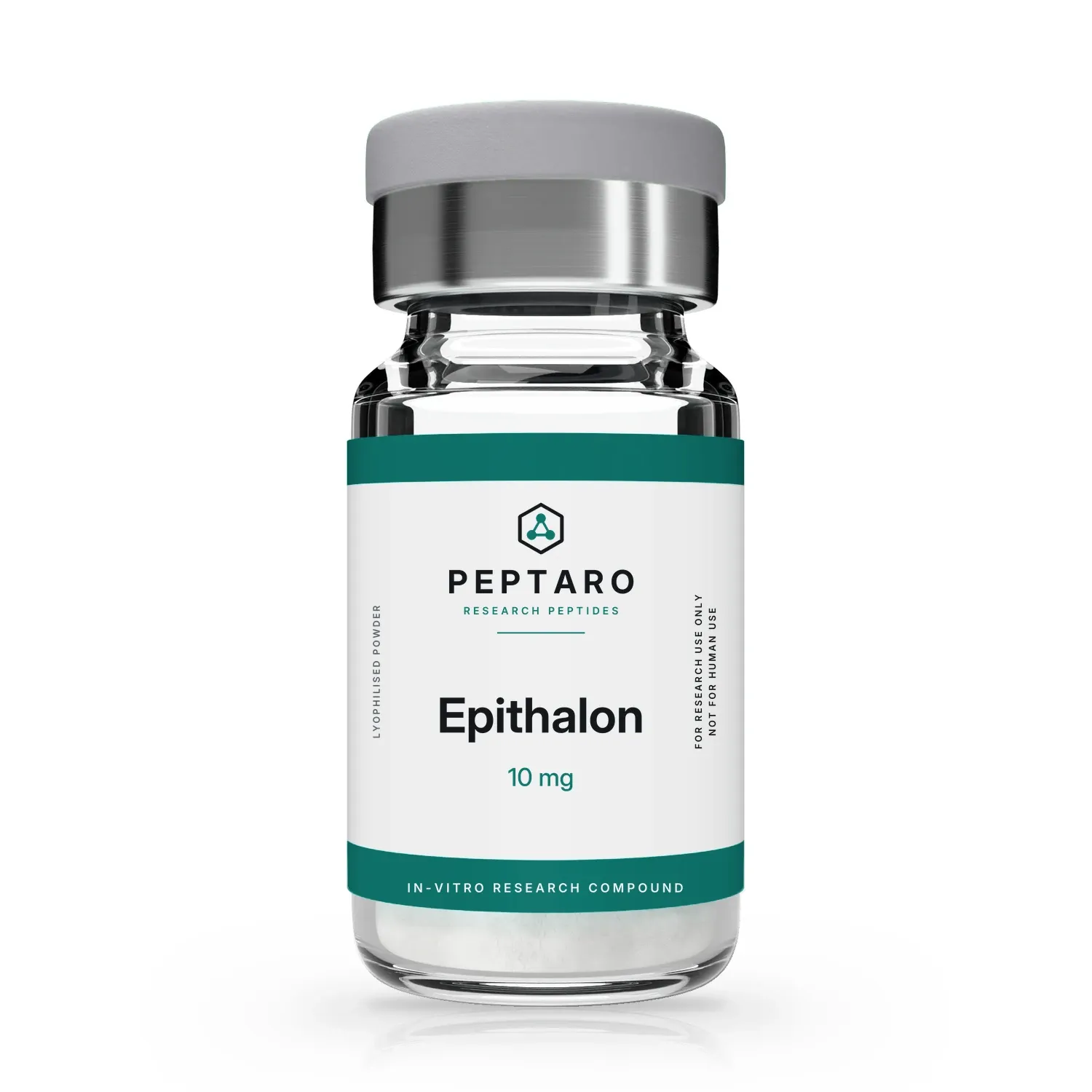
The current batch, UKPL-9501, is verified at 98.5% purity by RP-HPLC on the supplier's analysis, with independent third-party verification pending. The certificate of analysis is published on the product page, and the batch number on the certificate matches the batch number printed on the vial you receive.
Peptaro supplies research-grade Epithalon 10mg in the UK, supplier-tested, the certificate of analysis published on the product page, and same-day UK dispatch on orders placed before 3pm UK time. free tracked UK delivery on every order. Epithalon is supplied for in-vitro laboratory research only, and purchasers must be 18 or over.
Telomere and ageing research. In-vitro models measure telomerase activity and telomere length, following Khavinson, Bondarev and Butyugov (Bull Exp Biol Med, 2003). Animal models look at lifespan, ageing biomarkers and carcinogenesis, following Anisimov and colleagues (Biogerontology, 2003; Cancer Lett, 2002).
No. Peptaro supplies Epithalon 10mg strictly for in-vitro laboratory research. It is not a medicine and is not for human or veterinary use, and we don't give usage advice.
-20°C lyophilised, 2-8°C reconstituted. For preparing and aliquoting stock solutions, see the laboratory reconstitution guide.
Orders placed by 3pm Monday to Friday (excluding bank holidays) are dispatched the same working day by Royal Mail Tracked 24. Delivery is free, tracked and cold-packed. The minimum order is £299.
Research use only. For in-vitro laboratory research use only. Not for human or veterinary use. By continuing you confirm you are 18+ and purchasing for laboratory research.