BPC-157
5mg · 10mg
In Stock · Ready to Shipfrom £16.95from £2.90/mg
98% RP-HPLCJanoshik AnalyticalBatch UKPL-262
£59.99£0.86/mg
In Stock · Ready to Ship
Minimum order £299.00 per basket: mix any products. Research kits meet it on their own.
Dispatched same day if ordered by 3pm (Mon–Fri) · Royal Mail Tracked 24
| Vials in basket | Per vial | Saving |
|---|---|---|
| 1–2 | £59.99 | — |
| 3+ | £56.99 | 5% |
| 5+ | £55.19 | 8% |
| 10+ | £52.79 | 12% |
Discounts are basket-wide: mix any vials.
Documentation for each item ships with your order.
For in-vitro laboratory research use only. Not for human or veterinary use.
Documentation for each item ships with your order. The batch number printed on your vial matches it.
GLOW is a pre-blended three-peptide research vial containing BPC-157 10mg, TB-500 10mg and GHK-Cu 50mg, supplied as a single lyophilised powder for one-step reconstitution. BPC-157 (Body Protection Compound, 15-residue pentadecapeptide) and TB-500 (synthetic fragment of thymosin beta-4) are extensively co-investigated in soft-tissue, angiogenesis and cell-migration research. GHK-Cu (glycyl-L-histidyl-L-lysine copper complex) is widely studied for collagen synthesis, copper-mediated tissue remodelling and skin/connective-tissue research pathways. Combining all three covers the most-referenced regenerative-research formulation in a single vial. Third-party tested, per-component content reported on the lab certificate.
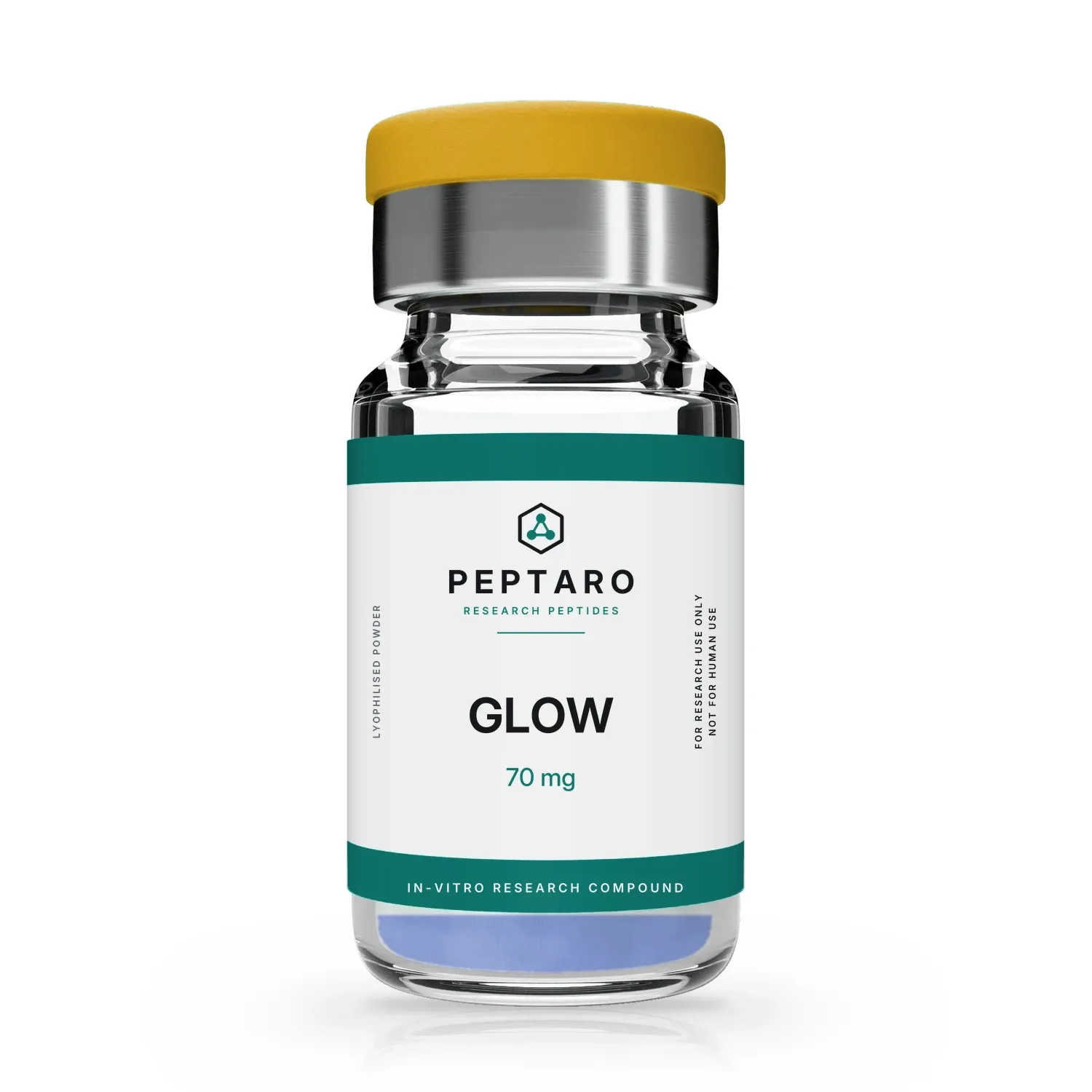
GLOW is one pre-blended vial holding BPC-157 10mg, TB-500 10mg and GHK-Cu 50mg: 70mg of lyophilised powder in total. One reconstitution puts all three into solution. The powder is blue, from the copper in GHK-Cu.
BPC-157 is the 15-residue pentadecapeptide GEPPPGKPADDAGLV (1419.53 g/mol, CAS 137525-51-0). TB-500 is synthetic thymosin beta 4, 43 residues (4963.4 g/mol, CAS 77591-33-4). GHK-Cu is the copper(II) complex of glycyl-L-histidyl-L-lysine (403.9 g/mol, CAS 89030-95-5).
GLOW is a supplier designation for a pre-blended multi-peptide research vial, not a single chemical entity. The GLOW 70mg vial contains BPC-157 10mg (pentadecapeptide GEPPPGKPADDAGLV, C₆₂H₉₈N₁₆O₂₂, 1419.53 g/mol, CAS 137525-51-0), TB-500 10mg (synthetic thymosin beta 4, 43 residues N-terminally acetylated, C₂₁₂H₃₅₀N₅₆O₇₈S, 4963.4 g/mol, CAS 77591-33-4) and GHK-Cu 50mg (glycyl-L-histidyl-L-lysine copper(II) complex, C₁₄H₂₄CuN₆O₄, 403.9 g/mol, CAS 89030-95-5), co-lyophilised in a single container. Because the components are co-lyophilised, one reconstitution step puts all three into solution at a fixed ratio, and they cannot subsequently be separated or independently varied. The blend itself has not been studied as a combination; the published evidence is three separate single-compound literatures.The blend itself has not been studied as a combination. Each finding cited here comes from work on one component alone.
Bock-Marquette and colleagues (Nature, 2004) found thymosin beta 4 forms a complex with PINCH and integrin-linked kinase, activating Akt in cardiac cells. Pickart and colleagues (Nature, 1980) showed GHK readily binds copper(II) and increases copper uptake into cultured hepatoma cells. These findings come from different systems and cannot be added up into a prediction for the blend.
Each component of the GLOW blend has its own preclinical and in-vitro literature, and the blend has none of its own. BPC-157 appears in in-vitro and animal work on angiogenesis and endothelial tube formation, focal adhesion signalling, gastrointestinal mucosal integrity and nitric oxide pathway modulation; Hsieh et al. (J Mol Med, 2017) reported VEGFR2 upregulation and receptor internalisation in human umbilical vein endothelial cells, and Chang et al. (J Appl Physiol, 2011) reported FAK and paxillin phosphorylation with increased outgrowth and migration in cultured rat tendon fibroblasts. A 2025 review by McGuire and colleagues in Current Reviews in Musculoskeletal Medicine found no adequately powered randomised controlled trial. TB-500 is synthetic thymosin beta 4, the principal G-actin sequestering molecule in eukaryotic cells; Philp et al. (FASEB J, 2003) reported that the LKKTETQ actin-binding motif at residues 17 to 23 is sufficient to promote endothelial cell migration in aortic ring and chorioallantoic assays, and Bock-Marquette et al. (Nature, 2004) reported integrin-linked kinase and Akt activation in mouse cardiac models. GHK-Cu is studied as a copper delivery ligand and as a matrikine, the GHK motif occurring within the alpha-2(I) chain of type I collagen; Pickart et al. (Nature, 1980) reported facilitated copper uptake into cultured cells, Siméon et al. (Life Sci, 2000) reported upregulated matrix metalloproteinase-2 alongside its tissue inhibitors in fibroblast culture, and Maquart et al. (J Clin Invest, 1993) reported connective tissue accumulation endpoints in a rat diffusion-chamber model. Because these findings come from different systems at different scales, they cannot be summed into a prediction about the blend, and any design attributing an effect to a single component requires the individual vials.
KLOW holds the same three components at the same masses plus KPV 10mg, 80mg in total. KPV adds a gut epithelial and PepT1 uptake literature. Individual BPC-157, TB-500 and GHK-Cu vials are the only format that allows a single-compound control, independent concentrations or attribution of an effect to one molecule. Some suppliers sell GLOW as a kit of five or six separate vials; ours is one pre-blended vial.
The three formats differ in composition and in experimental flexibility, not in quality. GLOW is 70mg total: BPC-157 10mg, TB-500 10mg, GHK-Cu 50mg. KLOW is the same three components at the same masses plus KPV 10mg, giving 80mg total, and adds a mechanistically distinct compound whose literature centres on PepT1-mediated uptake and NF-κB signalling in epithelial and colitis models rather than on angiogenesis, actin dynamics or copper transport. Individual BPC-157, TB-500 and GHK-Cu vials cost more in handling steps but are the only format that permits a single-compound control arm, an independent concentration per compound, or attribution of an observed effect to a specific molecule. One further note on the blend formats: because GHK-Cu is 403.9 g/mol against 1419.53 for BPC-157 and 4963.4 for thymosin beta 4, the 50:10:10 mass split is nothing like a 5:1:1 molar ratio, so molar arithmetic must be done component by component. Note also the supply-format difference across the market: GLOW and KLOW are sold by some suppliers as five- and six-vial kits, whereas the material here is a single pre-blended vial taking one reconstitution.
GLOW is a supplier designation for a pre-blended multi-peptide research vial, not a single molecule. The GLOW 70mg vial supplied here contains BPC-157 10mg, TB-500 10mg and GHK-Cu 50mg co-lyophilised in one container. The honest starting point for evaluating any glow peptide product is that the blend has not been studied as a combination: no published in-vitro or in-vivo work has examined these three compounds co-administered at this ratio, and no synergy between them has been demonstrated. What exists is three separate literatures, one per component, and that is what the glow stack peptide format aggregates. BPC-157 is a 15-residue pentadecapeptide, GEPPPGKPADDAGLV, 1419.53 g/mol, corresponding to a partial sequence of Body Protection Compound originally characterised in human gastric juice, and unusual among peptides of this length for resisting hydrolysis at low pH. Hsieh and colleagues (J Mol Med, 2017, PMID 27847966) reported upregulation and internalisation of VEGFR2 in human umbilical vein endothelial cells; Chang and colleagues (J Appl Physiol, 2011, PMID 21030672) reported increased FAK and paxillin phosphorylation in cultured rat tendon fibroblasts. TB-500 is synthetic thymosin beta 4, a 43-residue N-terminally acetylated polypeptide of 4963.4 g/mol and the principal G-actin sequestering molecule in eukaryotic cells. Philp and colleagues (FASEB J, 2003, PMID 14500546) showed the LKKTETQ actin-binding motif at residues 17 to 23 is sufficient to promote endothelial cell migration in aortic ring and chorioallantoic assays, and Bock-Marquette and colleagues (Nature, 2004, PMID 15565145) reported integrin-linked kinase and Akt activation in mouse cardiac models. GHK-Cu, the copper(II) chelate of glycyl-L-histidyl-L-lysine at 403.9 g/mol, is the largest fraction of the glow blend peptide by mass. Pickart and colleagues (Nature, 1980, PMID 7453802) reported facilitated copper uptake into cultured cells, and Siméon and colleagues (Life Sci, 2000, PMID 11045606) reported upregulated MMP-2 alongside its tissue inhibitors in fibroblast culture. One format distinction is worth noting when comparing glow peptides between suppliers: this is a single pre-blended vial taking one reconstitution step, rather than a multi-vial kit reconstituted component by component. Supplied strictly for in-vitro laboratory research use only. No therapeutic, cosmetic or appearance claim is made or implied.
Store GLOW powder at -20°C, away from light and moisture, for up to 24 months. After reconstitution, keep the solution at 2-8°C in a light-protected container and use it within 4 weeks. For longer storage, freeze single-use aliquots at -20°C and avoid repeated freeze-thaw cycles.
Light protection matters more for GLOW than for a single-peptide vial, because a copper(II) peptide complex is photolabile and the whole blend must be handled to the standard of its most fragile component. Keep lyophilised vials and reconstituted solution shielded from UV and fluorescent light and use amber or foil-wrapped vessels for aliquots. Freeze-thaw cycling can disrupt the copper coordination sphere as well as degrade the peptide backbones, so single-use aliquots are preferable to repeatedly accessing one stock.
Vials are sold on their own, without bacteriostatic water for mixing or other supplies.
How to reconstitute and handle
Let the vial and the bacteriostatic water reach room temperature and swab both stoppers with alcohol. Add the water slowly down the inside wall of the vial and swirl gently until dissolved. Do not shake or vortex. Expect a blue to blue-violet solution from the Cu(II) in GHK-Cu. A colourless or green-tinged solution suggests the copper complex has broken down. Use glass or good-quality polypropylene labware and avoid long contact with stainless steel.
Two blend-specific points apply. Never shake or vortex, the 43-residue thymosin beta 4 component is shear sensitive and agitation reduces recovery of intact peptide. And the reconstituted solution will not be colourless: expect a blue to blue-violet tint from the d-d transition of the Cu(II) centre in the GHK-Cu component, which is expected and is the standard bench indicator that the copper complex is intact. A colourless or green-tinged solution indicates the complex has been disrupted rather than simply diluted, and visible absorption around 500 to 600 nm is the usual check. Reconstitute away from direct light and use glass or high-grade polypropylene labware, avoiding prolonged contact with stainless steel or other chelating surfaces that can strip Cu(II) from the tripeptide.
For the full method, see the peptide reconstitution guide and the reconstitution calculator.
Published research on GLOW is indexed on PubMed. See our full UK buyer's guide for GLOW.
| CAS number | 137525-51-0 |
|---|---|
| Molecular weight | 1419.53 g/mol |
| Form | Blue lyophilised powder (single vial) |
Store sealed lyophilised vials at −20 °C, protected from light and moisture. For preparation, aliquoting and storage of reconstituted stock, see the laboratory reconstitution guide and the concentration calculator.
Each GLOW vial contains 70mg of lyophilised powder made up of BPC-157 10mg (pentadecapeptide GEPPPGKPADDAGLV, 1419.53 g/mol), TB-500 10mg (thymosin beta 4, 43 residues, 4963.4 g/mol) and GHK-Cu 50mg (glycyl-L-histidyl-L-lysine copper(II) complex, 403.9 g/mol). The current batch is UKPL-262, with a per-component content assay against a 98.0% specification published on the product page.
One vial. Some suppliers sell GLOW as a kit of five or six separate vials that the researcher reconstitutes and combines individually; the material here is a single pre-blended vial containing all three components co-lyophilised, so there is one reconstitution step and one container to store and label. That is a product format difference rather than a chemical one. The trade-off runs the other way for anyone who needs independent control of each component's concentration, which a blend cannot give.
No. There is no published in-vitro or in-vivo study of BPC-157, TB-500 and GHK-Cu co-administered together, at this ratio or any other, and no synergy between the three has been demonstrated. Every mechanistic finding cited for a glow stack comes from work on one component in isolation. Researchers should treat the blend as three separate compounds in one container and design controls accordingly, rather than assuming combined behaviour that has not been tested.
Individually, and only individually. BPC-157 is studied for local angiogenic signalling, Hsieh et al. (J Mol Med, 2017, PMID 27847966) reported VEGFR2 upregulation and receptor internalisation in human endothelial cells, and Chang et al. (J Appl Physiol, 2011, PMID 21030672) reported FAK and paxillin phosphorylation in cultured rat tendon fibroblasts. TB-500 is thymosin beta 4 and is studied for G-actin sequestration and cell motility, with Philp et al. (FASEB J, 2003, PMID 14500546) showing the LKKTETQ site alone promotes endothelial migration and Bock-Marquette et al. (Nature, 2004, PMID 15565145) reporting integrin-linked kinase and Akt activation. GHK-Cu is studied as a copper delivery ligand and matrikine, with Pickart et al. (Nature, 1980, PMID 7453802) reporting facilitated cellular copper uptake and Siméon et al. (Life Sci, 2000, PMID 11045606) reporting MMP-2 upregulation in fibroblast culture.
Because mass is not molar equivalence. GHK-Cu has a molecular weight of 403.9 g/mol against 1419.53 for BPC-157 and 4963.4 for thymosin beta 4, so on a per-milligram basis GHK-Cu contributes roughly 3.5 times the molar quantity of BPC-157 and 12 times that of TB-500. The 50:10:10 mass split therefore does not describe a 5:1:1 molar ratio, and any molar calculation must be done component by component from the individual molecular weights. This is the single most common arithmetic error made when working with multi-peptide blends.
Every GLOW vial is supplied from batch UKPL-262, which was assayed by Janoshik Analytical on 26/10/2026 with the content of each component (BPC-157, TB-500 and GHK-Cu) reported individually. The certificate of analysis for this batch is published on the product page and can be independently checked at /verify. tracked UK delivery is free on every order, and orders placed before 3pm UK time on a working day are dispatched the same day.
No. Once the co-lyophilised powder is dissolved, the three compounds are in one solution at a fixed ratio and cannot be separated or independently varied. That makes the blend format unsuitable for any design needing a single-compound control arm, a dose-response curve on one component, or attribution of an observed effect to a specific molecule. For those designs use the individual BPC-157, TB-500 and GHK-Cu vials, which carry their own batch numbers and their own certificates of analysis.
Peptaro sells the GLOW 70mg pre-blended vial from UK stock. Orders placed before 3pm (UK time) on a working day are dispatched the same day, and tracked UK delivery is free on every order.
Yes. Janoshik Analytical, an independent lab, quantified each component of batch UKPL-262 on 26 October 2026: BPC-157 11.41mg, TB-500 11.05mg and GHK-Cu 58.68mg per vial. The test measures content per component and does not report a single purity figure for the blend. The full certificate is published on this page, so you can check it before ordering.
It can be bought in the UK for in-vitro laboratory research. It is not a medicine and is sold for research use only, to buyers aged 18 or over.
Buy the GLOW stack for all three at a fixed ratio from one vial and one reconstitution. Buy the individual vials to run a single-compound control, vary one concentration or attribute an effect to one molecule. Each comes with its own batch and certificate.
No. Peptaro supplies GLOW 70mg strictly for in-vitro laboratory research. It is not a medicine and is not for human or veterinary use, and we don't give usage advice.
Store sealed lyophilised vials at −20 °C, protected from light and moisture. For preparing and aliquoting stock solutions, see the laboratory reconstitution guide.
5mg · 10mg
In Stock · Ready to Ship
5+5mg · 10+10mg
In Stock · Ready to Ship
5+5mg · 10+10mg
In Stock · Ready to Ship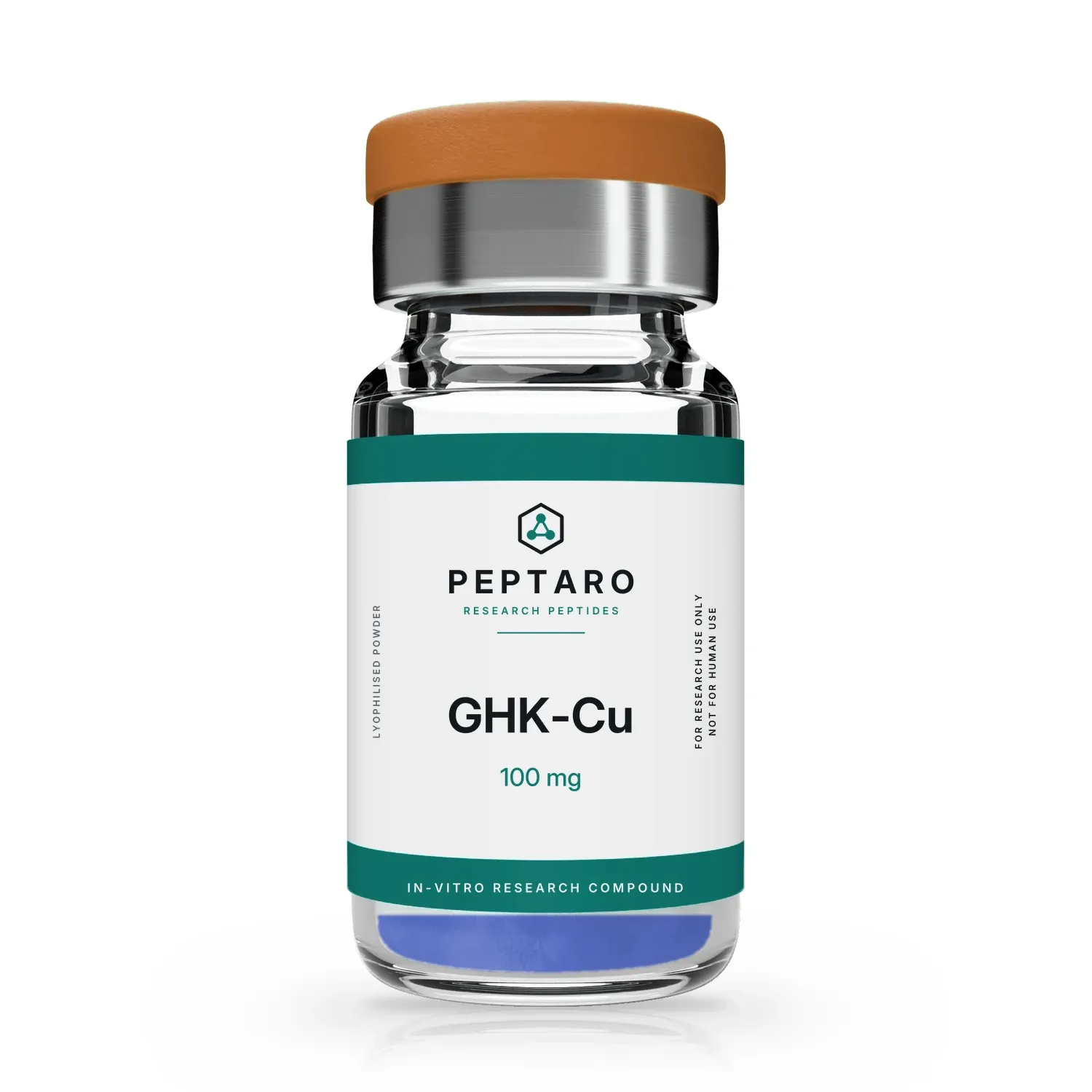
50mg · 100mg
In Stock · Ready to ShipResearch use only. For in-vitro laboratory research use only. Not for human or veterinary use. By continuing you confirm you are 18+ and purchasing for laboratory research.