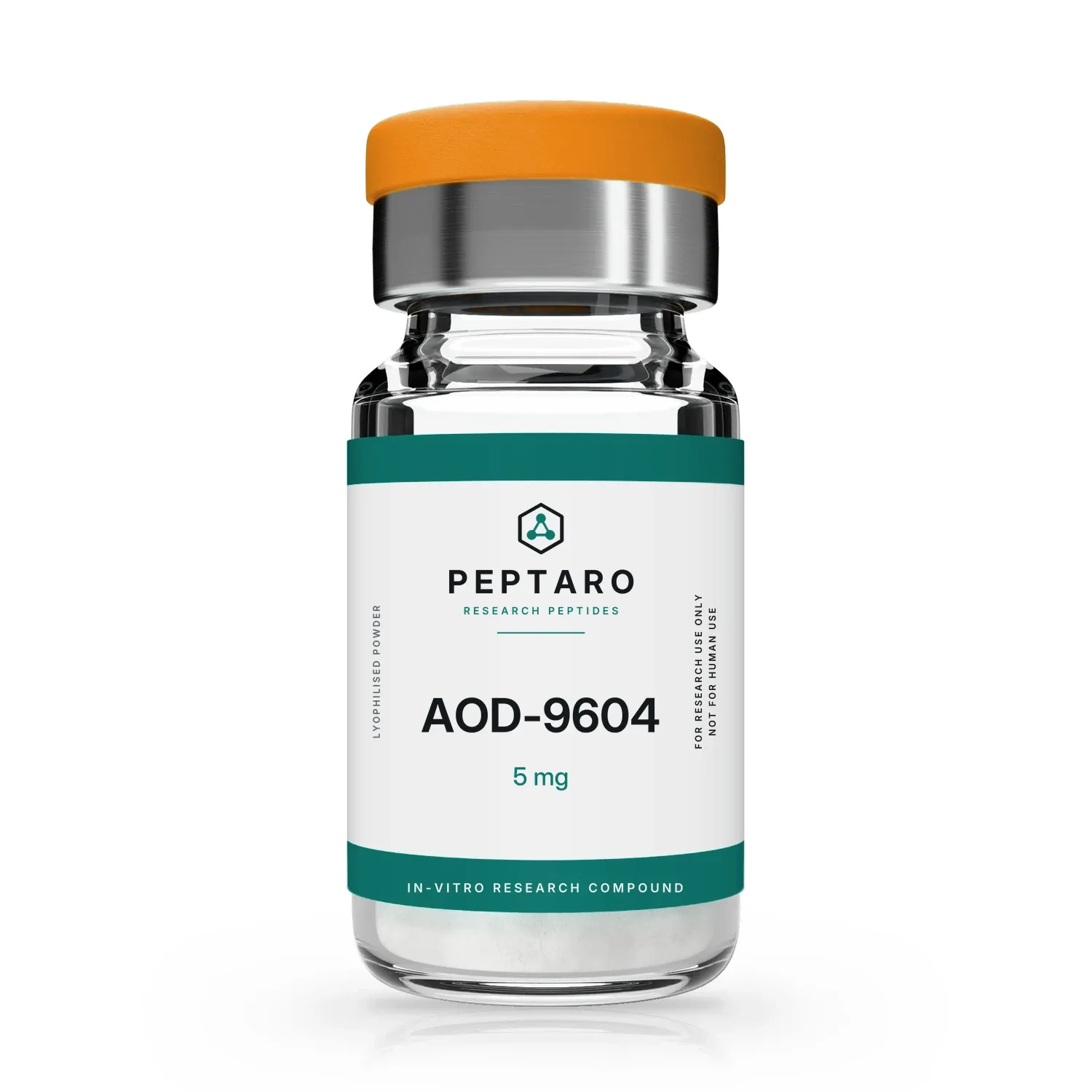
AOD-9604
5mg
In Stock · Ready to Ship£34.99£7.00/mg
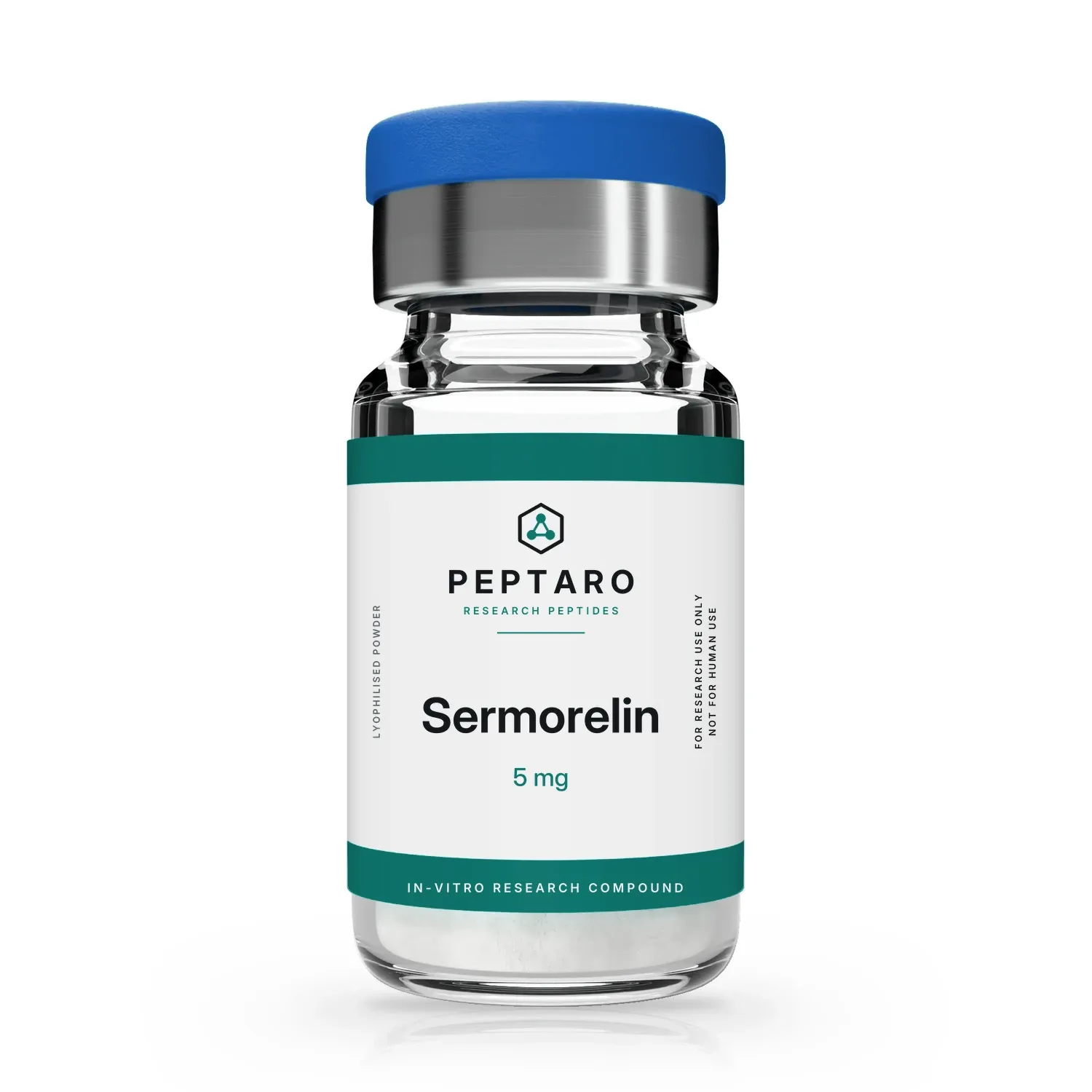
99.3% RP-HPLCJanoshikBatch UKPL-780
£27.99£5.60/mg
Out of stock
Minimum order £299.00 per basket: mix any products. Research kits meet it on their own.
Dispatched same day if ordered by 3pm (Mon–Fri) · Royal Mail Tracked 24
| Vials in basket | Per vial | Saving |
|---|---|---|
| 1–2 | £27.99 | — |
| 3+ | £26.59 | 5% |
| 5+ | £25.75 | 8% |
| 10+ | £24.63 | 12% |
Discounts are basket-wide: mix any vials.
Documentation for each item ships with your order.
For in-vitro laboratory research use only. Not for human or veterinary use.
Documentation for each item ships with your order. The batch number printed on your vial matches it.
Sermorelin is a synthetic 29 amino acid peptide corresponding to the biologically active 1-29 fragment of growth hormone-releasing hormone (GHRH), the shortest fully functional GHRH sequence. Research has examined its role as a growth hormone secretagogue acting at the pituitary GHRH receptor to stimulate endogenous, pulsatile growth hormone release, and it is widely used as a reference GHRH analogue in neuroendocrine and somatotroph signalling studies. Supplied as lyophilised powder, supplier-reported analysis, certificate published on this page.
Sermorelin, also sold as sermorelin acetate or GRF (1-29), is the first 29 amino acids of human growth-hormone-releasing hormone (GHRH) with a C-terminal amide. It is the shortest synthetic peptide with the full biological activity of GHRH. Each Sermorelin 5mg vial holds white lyophilised powder.
Sermorelin binds the GHRH receptor on somatotroph cells of the anterior pituitary and stimulates growth hormone secretion (Prakash and Goa, BioDrugs, 1999). Native GHRH has 44 residues, so sermorelin keeps the active region and drops the C-terminal third.
It was once a licensed medicine. As Geref it served as a diagnostic test of pituitary growth hormone reserve and was studied in children with idiopathic growth hormone deficiency. It was later withdrawn for commercial reasons, not because of a safety finding. No sermorelin product holds a UK marketing authorisation today.
The human literature is diagnostic. Prakash and Goa reviewed sermorelin as a rapid and relatively specific test for growth hormone deficiency, with fewer false positives than other provocative tests. Walker (Clin Interv Aging, 2006) is a perspective article on adult growth hormone insufficiency, not a trial report.
Both use the same 29-residue backbone and the same receptor. Sermorelin is the unmodified human sequence, with three known weak points. The Tyr-Ala start is cut by dipeptidyl peptidase-4, asparagine 8 deamidates and methionine 27 oxidises. Modified GRF (1-29), also sold as CJC-1295 without DAC, swaps four residues (D-Ala2, Gln8, Ala15, Leu27) to close those routes. CJC-1295 with DAC adds an albumin-binding group on top. Sermorelin is the fragment characterised in the human diagnostic literature, so findings made with it map straight onto native GHRH (1-29). Each substitution in an analogue adds a variable.
Sermorelin, also written sermorelin acetate and catalogued as GRF (1-29)-NH₂, GHRH (1-29) or hGRF(1-29), is a synthetic 29-residue peptide amide corresponding to the first 29 amino acids of human growth-hormone-releasing hormone, the shortest fragment of the native 44-residue hormone that retains full biological activity. Its one-letter sequence is YADAIFTNSYRKVLGQLSARKLLQDIMSR-NH₂, molecular weight 3357.9 g/mol, CAS number 86168-78-7. That 1-29 backbone is the parent scaffold of an entire family of GHRH analogues, modified GRF (1-29), CJC-1295 and related compounds are all substitution products of this exact sequence, which makes unmodified sermorelin the natural reference compound for GHRH-axis research. Pharmacologically, sermorelin binds the growth-hormone-releasing-hormone receptor on anterior pituitary somatotrophs and stimulates the release of endogenous growth hormone. What genuinely separates sermorelin from nearly everything else in this catalogue is its regulatory history: it was a licensed medicine. Marketed as Geref, sermorelin acetate was used as a provocative diagnostic agent for assessing pituitary growth hormone reserve and was studied in children with idiopathic growth hormone deficiency, a clinical literature reviewed in detail by Prakash and Goa (BioDrugs, 1999). The product was later withdrawn from the market for commercial reasons rather than because of any safety finding, and no sermorelin product currently holds a marketing authorisation in the UK or elsewhere. Walker (Clin Interv Aging, 2006) discussed sermorelin as a tool for studying the GHRH axis in adult-onset growth hormone insufficiency, though that paper is a perspective piece rather than trial data, and the honest position is that applications beyond the characterised diagnostic pharmacology remain unestablished. Chemically, the sequence carries a methionine at position 27, the oxidation-prone residue that dictates careful handling and storage. Each vial contains 5mg of sermorelin as white lyophilised powder, batch UKPL-780, verified at 99.3% purity by RP-HPLC, with the certificate of analysis published on this page. Supplied strictly for in-vitro laboratory research use only.
Keep sealed vials at -20°C, away from light and moisture. After reconstitution, keep the solution at 2-8°C and use it within 4 weeks, or freeze single-use aliquots at -20°C. Oxidation of methionine 27 is the degradation route to guard against. Keep vials tightly sealed with little headspace and away from oxidising agents.
Vials are sold on their own, without bacteriostatic water for mixing or other supplies.
How to reconstitute and handle
Bring the vial to room temperature and swab both stoppers with alcohol. Add bacteriostatic water slowly down the inside wall of the vial and swirl gently until dissolved. Do not shake or vortex: a 29-residue peptide is shear-sensitive. The solution should be clear and colourless. Methionine 27 oxidises in air, so work quickly and reseal promptly. Label the vial with the date and refrigerate.
For the full method, see the peptide reconstitution guide and the reconstitution calculator.
Published research on Sermorelin is indexed on PubMed. See our full UK buyer's guide for Sermorelin and UK buyer's guide for Sermorelin 5mg.
| CAS number | 86168-78-7 |
|---|---|
| Molecular formula | C₁₄₉H₂₄₆N₄₄O₄₂S |
| Molecular weight | 3357.9 g/mol |
| Sequence | YADAIFTNSYRKVLGQLSARKLLQDIMSR-NH₂ (GHRH 1-29 amide) |
| Form | Lyophilised powder |
| Appearance | White lyophilised powder |
| Release specification | ≥98.0% |
| Storage | -20°C lyophilised, 2-8°C reconstituted |
Store sealed lyophilised vials at −20 °C, protected from light and moisture. For preparation, aliquoting and storage of reconstituted stock, see the laboratory reconstitution guide and the concentration calculator.
Sermorelin binds the growth-hormone-releasing-hormone receptor on somatotroph cells of the anterior pituitary, stimulating the release of endogenous growth hormone. That receptor-level action at the top of the GH axis is what made it useful as a provocative diagnostic agent for assessing pituitary GH reserve, the use reviewed by Prakash and Goa (BioDrugs, 1999). Walker (Clin Interv Aging, 2006) frames the same pharmacology as a research route into the GHRH axis. In a laboratory context it functions as the reference GHRH (1-29) agonist.
Yes, this is the unusual part of its history. Sermorelin acetate was licensed and marketed as Geref, used diagnostically to assess pituitary growth hormone reserve and studied in children with idiopathic growth hormone deficiency (Prakash and Goa, BioDrugs, 1999). It was later withdrawn from the market for commercial reasons, not because of a safety finding. Withdrawal means no sermorelin product is a licensed medicine today, which is why it is supplied here strictly as a research compound.
Native human GHRH is 44 residues long; sermorelin is its first 29 residues with a C-terminal amide, the shortest fragment shown to retain full biological activity at the GHRH receptor. The truncation removes the C-terminal region without losing receptor pharmacology, which is why GHRH (1-29) became the standard scaffold for analogue development, modified GRF (1-29) and the CJC-1295 family are substitution products of the same 29-residue backbone that sermorelin supplies in unmodified form.
Sermorelin may be purchased in the UK as a research chemical for in vitro laboratory use only. Its former licence as a diagnostic agent has lapsed and it is not an approved medicine in the UK today, nor is it supplied for human consumption, veterinary use, or any therapeutic purpose. Purchasers must be 18 or over and confirm research-only use at checkout.
Each vial contains 5mg of sermorelin supplied as a white lyophilised powder, freeze-dried for stability. The peptide has a molecular weight of 3357.9 g/mol and CAS number 86168-78-7. Batch UKPL-780 is verified at 99.3% purity by RP-HPLC, with the certificate of analysis published on the product page.
Peptaro sells Sermorelin 5mg from UK stock, batch UKPL-780, and a 10mg vial with its own batch. Orders placed before 3pm UK time on a working day are dispatched the same day. tracked UK delivery is free on every order.
Not yet. Batch UKPL-780 carries a supplier-reported certificate stating 99.3% purity by RP-HPLC, with independent verification pending. The full report is published on the product page, and its batch number matches the one printed on the vial.
Sermorelin is the native reference compound for GHRH-axis research: GHRH receptor pharmacology, somatotroph signalling and pituitary growth hormone release. Stabilised GHRH (1-29) analogues are benchmarked against it. It also has a human diagnostic literature from its time as the licensed product Geref.
No. Peptaro supplies Sermorelin 5mg strictly for in-vitro laboratory research. It is not a medicine and is not for human or veterinary use, and we don't give usage advice.
-20°C lyophilised, 2-8°C reconstituted. For preparing and aliquoting stock solutions, see the laboratory reconstitution guide.
Orders placed by 3pm Monday to Friday (excluding bank holidays) are dispatched the same working day by Royal Mail Tracked 24. Delivery is free, tracked and cold-packed. The minimum order is £299.
5mg
In Stock · Ready to Ship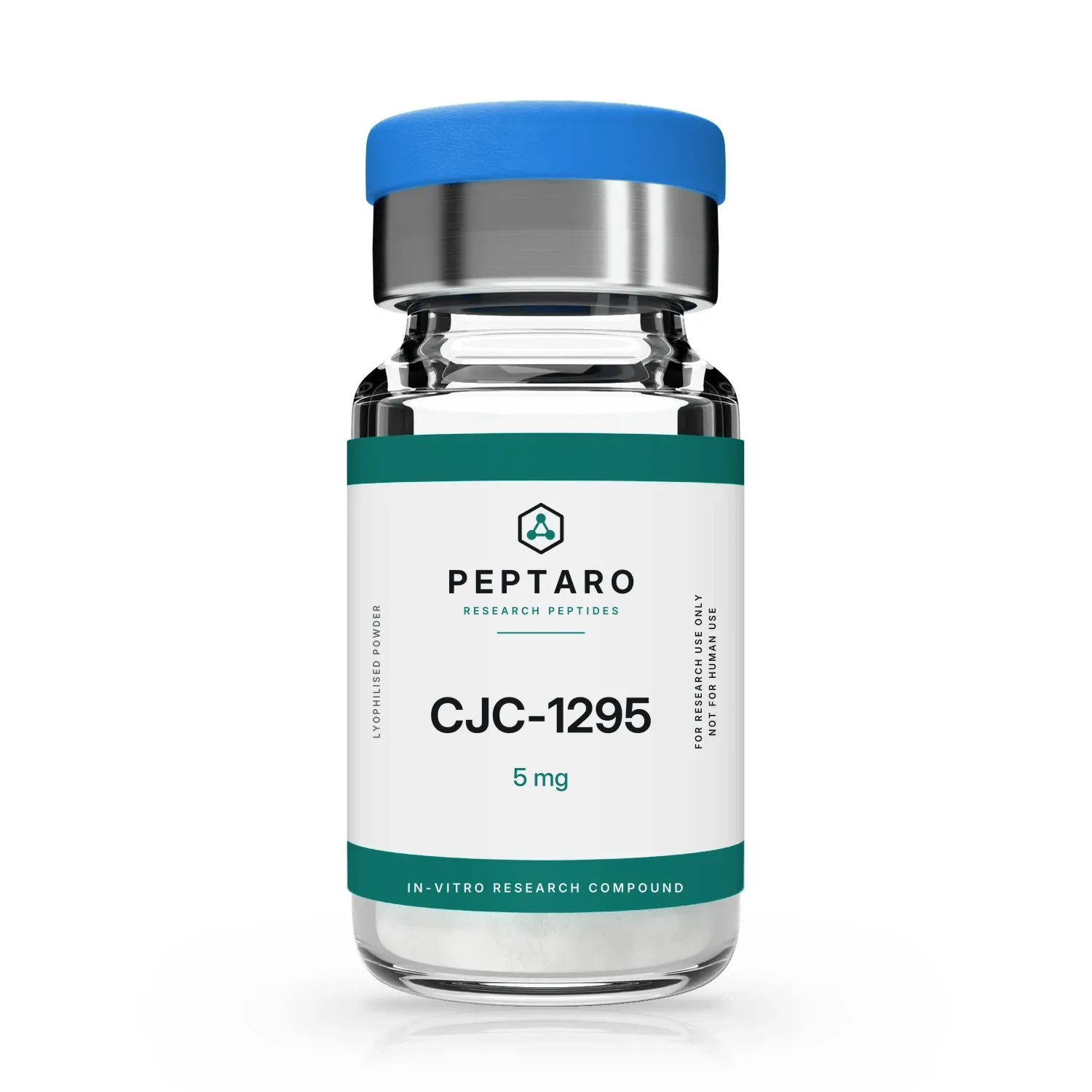
5mg
In Stock · Ready to Ship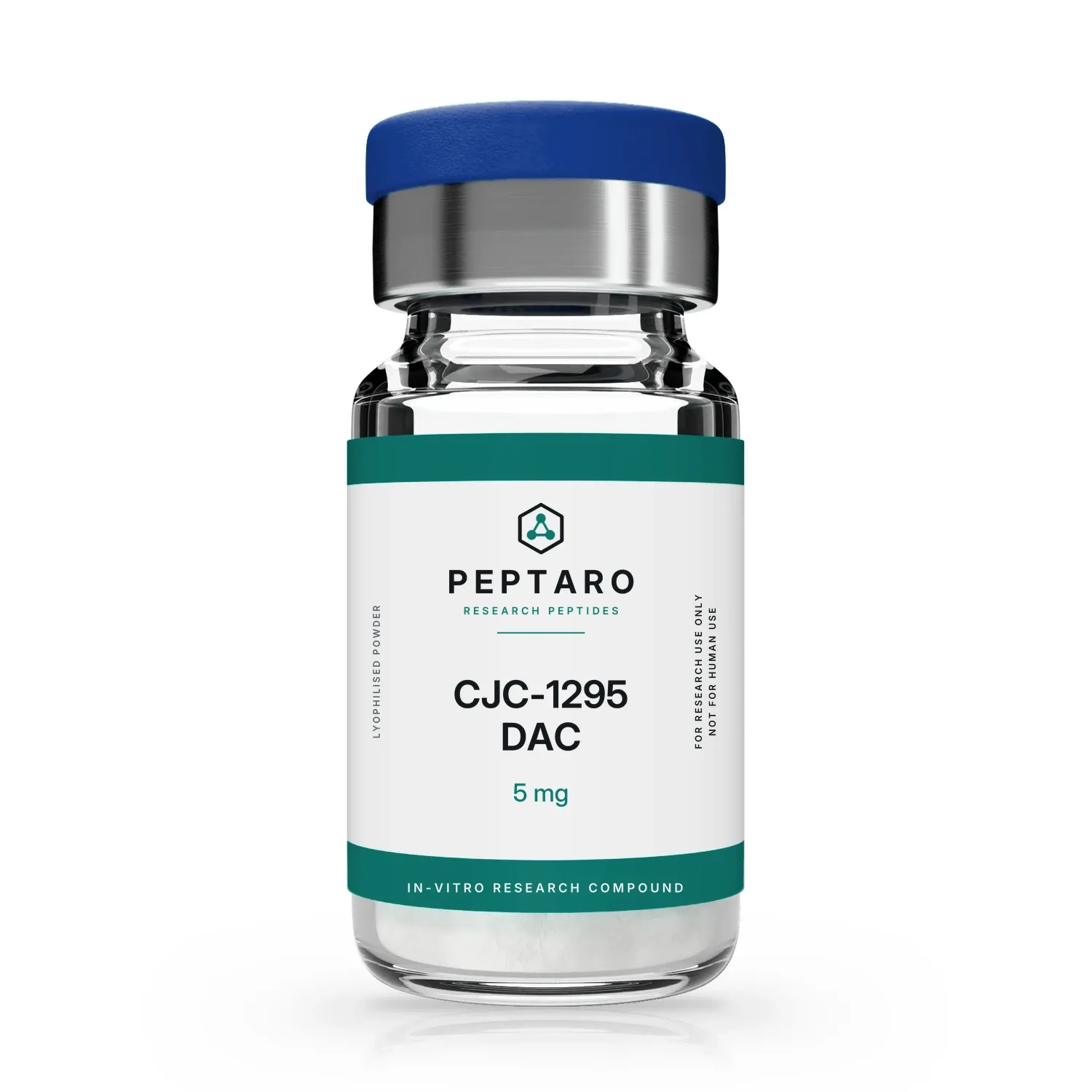
5mg
In Stock · Ready to Ship
5+5mg · 10+10mg
In Stock · Ready to ShipResearch use only. For in-vitro laboratory research use only. Not for human or veterinary use. By continuing you confirm you are 18+ and purchasing for laboratory research.